
Face painting isn’t a once-a-year holiday activity anymore. It’s a fixture at birthday parties, festivals, company events, TV productions, stage shows, community events, malls, and family gatherings. Behind every butterfly, superhero, and fantasy design sits a whole world of technique, creativity, quality materials, and countless hours of practice.
I’ve spent more than a decade working across the beauty world - bridal makeup, photo productions, a wide range of materials and professional techniques. Face painting pulled me in somewhere along the way, and I’ve interviewed face-painting artists, instructors, importers, and some of the people who developed the field in the first place, learning firsthand how it has grown and changed.
This isn’t only a research piece. It draws on professional experience, on interviews I’ve conducted over the years with key figures in the industry, and on close familiarity with the brands, techniques, and professional equipment that shape the field, in the US and internationally.
Whether you’re a parent looking for quality face paint for your kids, a makeup artist just starting out, a face-painting artist looking to go deeper, or simply curious about the field, this guide is built to be a comprehensive, reliable, up-to-date resource.
In this guide you’ll find:
- What face painting is and how the field developed.
- The people who helped shape the face-painting community.
- The types of face paint and the differences between them.
- A review of the leading professional brands in the world.
- Recommendations for building a kit, for beginners and professionals alike.
- Safety and hygiene rules every artist needs to know.
- Tips from my experience as a professional makeup artist.
- Frequently asked questions and answers to help you choose well.
What is face painting?
Face painting is one of the most creative and striking forms of makeup in the beauty world. While classic makeup is meant to enhance natural features, face painting turns the face itself into a canvas you can use to create almost anything - from a delicate butterfly, to a colorful tiger, to fantasy characters, superheroes, and elaborate artistic effects.
Most people associate the field with costume holidays, but it’s a professional discipline that has developed over decades and become part of the events, entertainment, and art worlds worldwide.
Today you can find face-painting artists at international festivals, company events, amusement parks, TV productions, theater shows, birthday parties, community events, malls, promotional events, and even fashion productions and artistic photo shoots.
Behind the brush: how it all began
Sometimes a new hobby finds you when you weren’t looking for one.
Mine found me at Midburn, a six-day festival. I was working mostly in beauty makeup at the time and hadn’t given face painting a second thought, but a few friends who knew I was a makeup artist asked me to decorate them for the festival.
A small favor turned into a creative streak that ran the length of the event. Over those six days I painted again and again - new ideas every morning, new colors, new people. Instead of makeup meant to enhance features, I found you could treat the face as a canvas and build characters, patterns, and stories on it.
When I got home, I found myself pulled into a new world. I started reading, studying, experimenting, getting to know the leading brands, interviewing artists, instructors, and importers, and digging into the history of the field.
Looking back, those six days at Midburn were my turning point. They reminded me that sometimes all it takes is one opportunity to discover a new field that sparks real curiosity.
It takes a lot more than drawing talent
Watch an artist paint a stunning butterfly in three or four minutes and it’s easy to chalk it up to natural talent. Behind a design like that are years of study, practice, and a deep understanding of color, composition, and materials.
Professional face-painting artists combine a range of skills:
- Precise work with brushes of different sizes.
- Creating color gradients using sponges.
- Blending several shades in a single stroke.
- Controlling facial proportions.
- Working quickly under pressure when dozens of kids are waiting in line.
- Maintaining strict hygiene between clients.
- Adapting the design to the person’s age, the nature of the event, and the time available.
Face painting turns the face itself into a canvas you can use to create almost anything.
Where do you see face painting today?
Face painting used to show up mainly at costume holidays and kids’ birthday parties. The field is far broader now, turning up at birthday parties, city festivals, summer events, malls, hotels, TV productions, stage shows, product launches, company events, fashion shoots, and branding events.
Each of them demands something different. With dozens of kids in line, the priority is fast, consistent work. On a photo production you can spend the time on fine details, complex layers of color, and designs that take much longer to finish.
A field that’s always evolving
Social media has done a lot for the field’s growth. Face-painting artists all over the world share tutorials, documented work processes, and new ideas, and that adds up to an international community that keeps pushing the craft forward.
The field itself has changed a lot in recent years. Finding professional supplies and reliable information once took real effort. Now there’s an active community of artists, instructors, importers, and suppliers, and makeup artists can learn, grow, and work with the same brands and techniques used everywhere else in the world.
From my experience: I’ve met plenty of makeup artists who assumed the most expensive equipment would automatically make them more professional. Almost every time, the real difference has come down to the hand holding the brush. Even a basic kit will produce impressive designs once you understand the fundamentals of the craft.
Face painting ideas for costume holidays
For a lot of people, face painting means one costume holiday a year, so that season deserves its own section. The most requested designs I see every year are butterflies and magical white creatures, superheroes for the kids, and more detailed fantasy or floral looks for teens and adults. The difference between a costume-holiday rush and a regular event is pace - you’re working fast on a lot of kids back to back, so come with a few “base” designs ready that you can personalize in seconds instead of planning each one from scratch in front of the child.
A big costume-holiday push is also exactly where professional paints earn their money over a cheap kit. It’s a long day with a lot of contact with the face - hugs, eating, sweat - and quality paint is the difference between a design that still looks good by evening and one that smears within the hour. Specific brand recommendations come later in this guide.
How did face painting develop as a field?
Looking at the face-painting work on social media today, it’s hard to picture how recently the field barely existed in professional form in a lot of places, Israel, where I’m based, among them.
In the early 2000s, most face painting done in Israel ran on simple kits sold around the Purim holiday. The color range was limited, the quality of the materials was limited, and only a handful of people knew the professional brands already common in the US, Australia, and Europe.
There wasn’t much to learn from in those years, either. Anyone who wanted to grow searched international sites for information, bought professional books, watched English-language tutorials, and largely taught themselves.

The small community that laid the groundwork
Unlike some other corners of makeup, face painting in Israel didn’t grow up around one school or one company. It developed gradually, through a small community of artists, instructors, and equipment suppliers, each contributing in their own way - some brought professional face paints into Israel for the first time, some developed working methods and training programs, and some represented Israel at international conferences.
From a Purim activity to a real profession
The way the public sees the field changed along with it. Face painting was once a kids’ Purim attraction. Today it’s part of city festivals, malls, hotels, company events, TV productions, theater and stage performances, fashion shoots, and photography.
The demand to work quickly, maintain a high standard of execution, and create an enjoyable experience for dozens, and sometimes hundreds, of kids in a day turned face painting into a genuine profession.
The materials went through their own revolution
Plenty of artists used to work with products that were never designed for professional face painting. The paints were less pigmented, coverage was limited, and removal could be a project in itself. Today there’s a wide range of professional brands developing dedicated products that allow precise work, high wear, even application, and relatively easy removal.
The people who helped shape face painting in Israel
Behind that growth are people who spent years bringing knowledge, equipment, and technique into the community. I interviewed several of them for the original version of this article, and what they shared shaped my understanding of how far the field has traveled. I want to acknowledge them here - not as an advertisement, but as part of the history of face painting in Israel.
Anna Vistrich
Anna Vistrich is considered one of the best-known Israeli face-painting artists on the international stage. Over the years she’s been invited to teach workshops and masterclasses at professional conferences around the world, including in the United States and the Netherlands, and has presented work that has influenced face-painting artists in many countries.
Beyond her work as an artist and instructor, she helped introduce the local community to leading professional brands, Diamond FX and Superstar among them, and has mentored a lot of makeup artists early in their careers. Her signature style runs on precision, clean sponge work, and a minimalism that lets the colors and the design speak for themselves.
Natalie Litzinsky
Natalie Litzinsky is a face-painting artist, instructor, and professional-equipment importer who has worked for years to advance the field in Israel. Beyond her work as an artist, she’s invested heavily in training up-and-coming makeup artists, building working kits, and making quality professional equipment more accessible.
Drawing on what she’s learned locally and internationally, she’s helped a lot of makeup artists see that you don’t need the most expensive kit to start working - you need the products that genuinely serve your day-to-day work.
Shelly Agami
Shelly Agami is known to many as a makeup artist, instructor, and professional content creator in the makeup world. She’s also developed her own professional face-painting product line, built out of hands-on field experience and a close understanding of what makeup artists actually need. It includes face paints, brushes, stencils, and complementary products, and it has widened the range of options available to professional makeup artists in Israel.
The suppliers and importers who helped grow the field
Alongside the artists and instructors, the field’s growth in Israel also depended on importers and suppliers who brought internationally recognized professional brands into the country, companies like Chen Shivuk among them, together with other importers who spent years making face paints, brushes, sponges, and professional equipment accessible to makeup artists. Without their work, it’s hard to say what the field would look like in Israel today.
From my experience: What has impressed me most over the years is how willing people in this field are to share what they know. Almost everyone I interviewed for the original article took the time to explain, to teach, and to help other makeup artists grow.
Professional face paints - how do you choose the right one?
One of the first questions anyone entering the world of face painting asks is: which paints should I use?
From the outside, face paints all look alike. Work with a few and the differences turn out to decide whether a job goes fast, precise, and enjoyable, or turns into a fight. Pigment quality, texture, ease of application, drying speed, wear, and how the paint comes off the skin all vary from brand to brand.
5 mistakes beginners make
- Buying way too many colors.
- Not buying a balanced set - you need enough base colors and enough colors for line work.
- Buying cheap products that aren’t skin-safe.
- Ordering from abroad instead of from suppliers who sell locally - international shipping is expensive and often not worth it.
- Not buying the tools that help you work fast and easily - a small sponge on a stick for stencil work is a must, in my opinion!
Water-based face paints - the choice of most face-painting artists
Most professional face-painting artists work with water-based paints. They come as solid color cakes: wet a brush or a sponge lightly, run it over the paint, and within seconds you have a rich, high-coverage layer.
Keep in mind that water-based paints aren’t fully waterproof once dry. Rain, a pool, or any activity with serious sweating can affect the design.
Wax- or oil-based paints
Wax- and oil-based formulas are more common in other corners of makeup - theater, film, special effects. They give especially opaque coverage, but they take a different working method and sometimes a dedicated remover.
Metallic paints
Metallic paints come in when you want depth, shine, or a festive effect. They aren’t usually a base color; they’re for small highlights - crowns, butterfly wings, princess designs, unicorns, dragons, fantasy characters.
Neon and UV paints
Glow parties, festivals, and nighttime events keep getting more popular, and neon or UV-reactive paints are what they run on. Worth knowing: not every neon color actually glows under UV. Some look brilliant in daylight and do nothing at all under black light.

Instead of looking for “the best brand,” it’s better to build a kit made up of the products that best serve your working style.
One invention that changed the field - Split Cakes
If one product changed the way face-painting artists work, it’s the Split Cake palette. Instead of working each color separately, several shades sit side by side in one palette. Load a wide sponge and they all load together, so a single motion lays down a rich, precise gradient.
Safety first
Whichever brand you choose, buy from reliable sources. Choose face paints that were designed from the start for use on skin and that meet the relevant standards in the markets where they’re sold.
From my experience: When I’m evaluating professional equipment, I don’t only ask “is the color pretty?” I ask “will it help me work better?” It’s also why so many makeup artists combine products from several different companies, taking from each whatever it does best.
Professional face-paint brands - what’s the real difference between them?
“Which brand is the best?” comes up in almost every course, every Facebook group, every conversation between face-painting artists. It’s a natural question, and a slightly misleading one. Almost every professional builds a kit over time that combines products from several different companies, because every brand has its own strengths.
TAG Body Art
The Australian brand got popular on a strong combination of quality, accessible pricing, and a wide color range. It’s been the choice of everyone from beginners to professionals working large events for years.

Diamond FX
If TAG is known for balance, Diamond FX is synonymous with crisp lines and impressive coverage. Plenty of artists reach for it on tigers, superheroes, dragons, and masks.
Superstar
Superstar, out of the Netherlands, is known above all for its creamy texture. A lot of makeup artists love it for soft color transitions and gentler designs.
Global Colours
Global is a long-established Australian brand found in face-painting kits worldwide. Consistent quality and a wide color range are why so many artists build the base of a professional kit around it.

Fusion Body Art
Fusion is one of the younger brands in the field, and it became a favorite among face-painting artists worldwide fast, on the strength of a wide range of Split Cake palettes and creative color combinations.
Cameleon
Cameleon is known above all for its color combinations. The Split Cake palettes are considered especially high-quality, which is why so many makeup artists use them to turn out butterflies, flowers, and rich backgrounds quickly.
Mehron
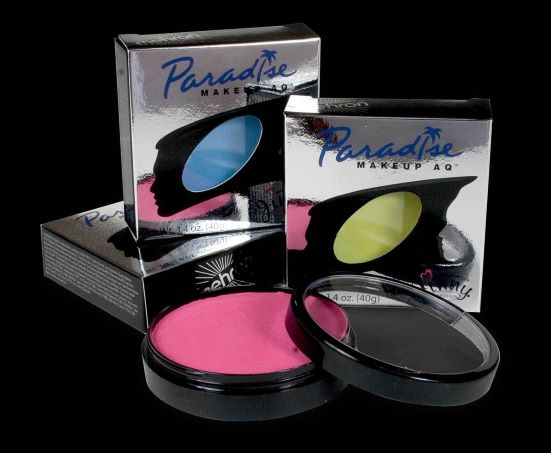
Mehron is one of the oldest and best-known names in professional makeup. The American company has operated for decades and produces a wide range of products for theater, film, television, and special effects, and alongside those areas also offers professional face paints.

Kryolan
Very few companies enjoy a reputation like Kryolan’s. The German brand is known mainly for its professional makeup products for theater, opera, film, and television, but it also offers quality solutions for face painting.
Snazaroo
If there’s one brand many parents recognize, it’s probably Snazaroo. Unlike most of the companies mentioned above, it’s aimed mainly at the home market and kids’ craft activities.
Do you have to stick to one brand?
Not at all. Plenty of professional kits combine products from several different companies - Diamond FX’s white, Superstar’s blending, Fusion’s Split Cakes, TAG’s color range. That isn’t a contradiction. It’s how most professionals work.
From my experience: One of the most common mistakes is hunting for “the single best brand.” The real question is different: which product does the best job for you? The most professional kit isn’t the one built from a single brand, it’s the one built through real experience and a genuine fit with the way you work.
How to build a professional face-painting kit
One of the most common mistakes among makeup artists starting out is assuming you need everything you see in stores, or everything in an experienced artist’s kit, before you can start working. Most professionals built their kits gradually: basic equipment first, experience next, new products after that.
Inside my kit
One product I’d never give up?
A small bottle of glitter I bought from Anna Vistrich - the awe and sparkle it brings to every kid’s eyes when I paint them with it!
Which colors should you buy to start?
If you’re just starting out, there’s no need to buy dozens of shades. A basic set can include white, black, red, blue, yellow, green, pink, orange, and purple. From there you can add pearl shades, metallics, gold and silver tones, neon colors, and Split Cake palettes.
Brushes - the tool that matters more than you’d think
A basic kit should include a few types: Round - the classic brush for lines, dots, and small flowers. Flat - for wide strokes and leaves. Filbert - for petals and wings. Liner - for long, thin lines and small details.
Sponges and Split Cakes
The sponge handles most of the color coverage - backgrounds, gradients, the base of a butterfly, clouds. Split Cake palettes let you load several colors in one motion and turn out butterflies, rainbows, and flowers in seconds, which is a huge time-saver at big events.

Stencils and glitter
Stencils aren’t essential, but they add interest to a design fast - scales, stars, lace, reptile-skin effects. Glitter can transform a design completely, as long as you choose products meant for cosmetic use only.
A mirror, a chair, and an organized work kit
A small mirror lets kids see the finished result, and that’s often the most exciting moment of the whole thing for them. A properly sized chair and an organized work kit make a real difference to your own comfort over a long event.
Basic equipment checklist for beginners
- Quality face paints in basic shades.
- Two to four brushes in different sizes.
- A few quality sponges.
- A water-misting bottle or a cup of clean water.
- A small towel and paper towels.
- Hand and equipment sanitizer.
- A small mirror to show the client the result.
- An organized work bag.
From my experience: Don’t buy all the equipment at once. Start with a basic, quality kit, work with it, notice which designs you end up painting again and again, and expand from there.
Hygiene and safety in face painting - everything you need to know
Successful face painting isn’t only about talent or creativity. Professional work starts with hygiene, safety, and the wellbeing of the person in the chair. Good working habits protect your clients and your professional reputation at the same time.
Only use products made for skin
One of the most important rules there is: use paints developed specifically for face painting or body art. With kids, and with anyone who has sensitive skin, stick to recognized brands bought from reliable suppliers.
Only work on healthy skin
Take a few seconds to look at the skin before you start painting. If there’s an open wound, a burn, significant abrasion, a rash, a local infection, or unusual irritation, don’t paint that area.
Keep brushes and sponges clean, and change the water
Brushes and sponges are in direct contact with the skin, so they have to stay clean through the whole workday. A lot of artists run one cup of water for long stretches, and that water fills with leftover paint as the hours go by - changing it regularly keeps your colors clean and your designs sharper.
The eye area and allergies
The skin around the eyes is especially delicate, and while painting it’s important to avoid getting paint in the eye itself. No cosmetic product can guarantee that a particular person won’t have a reaction - if an unusual reaction appears, stop use and gently remove the paint.
Good working habits protect not just your clients, but your professional reputation too.
Questions worth asking before every event
- Are there any kids with known sensitivities that parents mentioned?
- Is there enough lighting at the work area?
- Is there enough clean water for the whole event?
- Is the equipment clean and ready to use?
- Does the setup allow for an orderly, pleasant line?
From my experience: Over the years I’ve noticed that parents pay attention not just to the finished design, but to how you work. Professionalism starts well before the first stroke of the brush.
Basic face-painting techniques - the fundamentals every artist should know
Look at a complex face-painting design and it’s easy to assume dozens of techniques went into it. Almost every design, simple or complex, is built from a small number of fundamentals that repeat over and over. Even experienced artists keep practicing the same basic strokes their whole careers.
Myth or fact?
“You need to know hundreds of designs before you can start.”
Myth.
By learning the technique for leaves, lines, and dots, you can paint almost anything. Every design, simple or complex, is built on these fundamentals.
Controlling water and loading your brush
Too little water leaves the paint dry and the lines broken. Too much dilutes the pigment and makes a crisp line almost impossible. How you load the brush matters too: load gently, with a slight rotating motion, until every bristle is evenly coated, and the line comes out cleaner and more continuous.
The variable-width line and dots
One of the most important exercises for beginners is a line that goes from thick to thin in a single stroke - the core technique behind leaves, petals, flames, and wings. The dot of color is just as fundamental, and it turns up in almost every design: flowers, butterflies, unicorns, princesses, masks.
Spirals and sponge work
The spiral adds flow and fills empty space without overloading a design. With a sponge, the goal isn’t to rub paint on but to lay it down with gentle tapping motions, which gives you an even layer of color with no smear marks - the basis of backgrounds, skies, butterflies, and animals.
Speed vs. precision, and how to practice effectively
At birthday parties and busy festivals there’s no room to spend twenty minutes on a design, so professional artists build a repertoire of quick three-to-five-minute designs over the years. Getting better isn’t only about how much you practice but how you practice - pick one skill and drill it, painting dozens of dots until they’re consistent, rather than attempting complex characters from the start.
From my experience: In every other corner of makeup too, real progress comes from mastering the fundamentals. Once your hand stops having to think about how to paint a dot or a clean line, you can focus on what actually makes a design special - creativity, and adapting it to the person in front of you.
How to choose a face-painting artist
Face painting can become one of the most beautiful memories from an event - or a disappointment that’s quickly forgotten.
The difference isn’t only artistic talent. It’s experience, how the artist treats kids, hygiene standards, and the ability to work professionally under pressure.
Start with the portfolio
Don’t stop at whether the designs are pretty. Look at whether the lines are clean and precise, whether the colors read rich and even, whether there’s a real range of styles, and whether the photos show actual work rather than studio-perfect samples.
Experience, equipment, and hygiene
You can be a very talented painter and still fall apart at a busy event. An experienced artist handles a long line, last-minute special requests, and changing light without dropping the quality. Ask what paints they use, and watch for an organized setup, clean equipment, and clean water all the way through the event.
How they treat kids, and fit for the event
Face painting is also a personal encounter with kids who are shy, nervous, or out of patience. An experienced artist knows how to explain, build trust, and work gently. Match the artist’s experience to the type of event, too - a home birthday party, a busy festival, a branded company event, and a photo production all demand something different.
From my experience: Clients remember far more than the final result. They remember how they were welcomed, the patience, the smile, and the feeling that someone gave them real attention.
Behind the scenes: a day with 150 kids
I usually arrive about an hour before the event starts.
Before the first child sits down, I’ve already set up my entire station - the colors in a fixed order, brushes ready, sponges, water, glitter, and everything else I’ll need, so I never have to search for anything mid-work.
Then the rush begins.
Within minutes there’s a line. Some kids know exactly what they want. Others change their minds three times on the way to the chair. Siblings want to match. One girl wants the butterfly she saw on her friend, but in pink.
And while I’m painting, I’m also talking to them. Asking what they love. Letting them choose colors. Trying to turn those short minutes into an experience.
All through an event like that I’m changing water, cleaning equipment, keeping things organized, and holding a steady pace, so every child gets a beautiful design and the line never drags.
By the end of the event, tired as I am, there’s always one moment that reminds me why I love this field - when the kids run to the mirror, or to their parents, with a huge smile.
For me, that’s the most rewarding part of the job.
FAQ
Is face painting safe for kids?
In most cases, yes. With quality face paints designed specifically for use on skin, used according to the manufacturer’s instructions, face painting is considered a safe activity. If a child has a history of skin allergies, tell the artist in advance.
What age can kids start getting their face painted?
There’s no single age that fits every child. Plenty of kids start enjoying face painting at two or three, once they can sit still for a few minutes and cooperate.
How long does a face-painting design last?
It depends on the type of paint, the weather, and how active the wearer is. As a rule, professional face painting holds up well for many hours over the course of an event.
Is face paint easy to remove?
In most cases, yes. Professional water-based face paints come off with lukewarm water and a gentle soap. Wet the design first and let the paint soften before you start removing it.
Can you use regular makeup instead of face paint?
Not recommended. Regular makeup products aren’t designed to cover large areas or create the effects typical of face painting.
How long does it take to paint one child?
It depends on the complexity of the design and the type of event. At busy events, it’s common to choose designs that can be completed within a few minutes.
Is face painting suitable for adults too?
Absolutely. In recent years, more and more adults have been choosing face painting at company events, festivals, and costume parties.
Is it worth buying a cheap face-painting kit?
For a one-time activity at home, a basic kit may be enough. Anyone planning to work regularly is better off investing in higher-quality products, and either way, make sure what you buy is meant for use on skin.
Do you need to know how to draw to do face painting?
Not necessarily. Drawing talent helps, but it isn’t a requirement - plenty of artists build their skills through consistent practice and the fundamental techniques.
Do you have to use just one brand?
No. Plenty of professional makeup artists combine products from several different companies, based on their working style and personal preferences.
The bottom line
Face painting combines creativity, technique, quality materials, and the ability to create an enjoyable experience for whoever sits down in front of the brush. The field has developed enormously over the years, in Israel and around the world.
Beyond the colors, the brushes, and the techniques, face painting is, first and foremost, a meeting between people.
For a child, a small butterfly or superhero design can become a memory that lasts for years. For the artist, it’s a chance to put professional precision together with imagination. I hope this guide has helped you understand the world of face painting a little better.
About the author
Michal Loren is a professional makeup artist with more than a decade of experience in the beauty industry. She has worked across a wide range of makeup disciplines, including bridal makeup, fashion productions, photo shoots, and work with professional materials. As part of that work, she has interviewed face-painting artists, instructors, importers, and industry figures who helped shape the field.

