Pigmentation is one of the most common skin concerns, and one of the most confusing. Almost everyone who starts paying attention to skincare runs into a product promising “brightening,” “dark spot correction,” or “even skin tone,” and walks away assuming pigmentation is one problem with one solution: you have a dark spot, you put something brightening on it, you wait for it to fade. Skin doesn’t work that way.
A brown mark left by years of sun exposure, a dark spot lingering after a breakout, melasma sitting symmetrically across the cheeks, and a brand-new spot that wasn’t there last month can look nearly identical to an untrained eye and still come from completely different processes. One face often carries more than one type at once, which is exactly why a product improves one area and barely touches another. It’s also why so many of us cycle through serum after serum: one friend swears glycolic acid cleared her spots, another swears by azelaic acid, a third uses retinol. All three can be right, because they may not be treating the same thing at all.
The other common mistake is assuming you erase pigmentation by stripping away layers of skin. That logic produces routines stacked with acids, peels, and retinol, and skin that’s red, stinging, and flaking. Inflammation and irritation can themselves trigger more pigmentation in some skin types, so you can fade one spot while setting up the conditions for several new ones. Treating pigmentation doesn’t start with a product. It starts with a diagnosis: what is this mark, why did it form, is the trigger still active, and what can your skin actually tolerate long-term?
What is pigmentation, and what are we actually looking at on the skin?
Melanin is the primary pigment that gives skin, hair, and eyes their color. It’s produced by cells called melanocytes, which live in the lower layers of the epidermis. Melanin isn’t a flaw to be eliminated. It’s part of the skin’s defense system, and among other things it helps absorb and scatter some of the energy from UV radiation. Worth holding onto that before we spend a whole guide talking about how to reduce it.
Hyperpigmentation is what we call it when an area carries more pigment than the skin around it. Sometimes melanocytes produce more melanin; sometimes the pigment distributes unevenly; sometimes, after inflammation, it ends up deposited in deeper layers too. The word “pigmentation” describes what you’re looking at, not what caused it - a bit like “redness,” which could mean rosacea, irritation, allergy, a breakout, or a hot flush. So before you ask “what’s the best serum for pigmentation?”, ask what kind of pigmentation this is.
How melanin forms - and why so many pigmentation products mention “tyrosinase”
Inside melanocytes sit tiny structures called melanosomes, where part of melanin production happens. One of the key enzymes in that process is tyrosinase, which is why the name turns up everywhere once you start reading about spot-fading ingredients. Some actives aim at specific stages of melanin production. Others don’t touch melanin production at all - they speed up cell turnover, calm inflammation, or help distribute existing pigment more evenly.
Which is why the word “brightening” on a label tells you nothing. Vitamin C serum, azelaic acid, and glycolic acid all get sold on the same promise of an even, brighter complexion, and they get there by completely different routes. It’s also why combining ingredients can beat using one alone - but only if your skin can actually handle that routine.
Why does pigmentation form in the first place?
Skin makes more pigment in response to a long list of triggers, and they don’t all look alike. UV exposure is one of the main ones: sun prompts skin to ramp up melanin production as a defense mechanism. On some people that reads as a relatively even tan; on others, as spots; and in conditions like melasma, light exposure can worsen areas that are already pigmented.
Inflammation is the other major trigger. A breakout can fully resolve - no swelling, no pain - and still leave a dark mark for months. The same goes for eczema, irritation, a burn, aggressive treatment, or picking. Hormonal factors, certain medications, and some skin conditions can affect pigmentation too. So effective treatment has to answer two questions at once: how do we treat the mark that’s already there, and how do we stop making new ones? Answer only the first and you’ll chase the same problem for years.
How do you identify which type of pigmentation you have?
There are clues that point you in a direction, but home diagnosis is never a substitute for a dermatologist when there’s any doubt. A mark that showed up exactly where a breakout, scrape, or irritation used to be - completely flat, only the color changed - points toward post-inflammatory hyperpigmentation (PIH). Relatively well-defined brown spots in areas that have taken years of sun - face, chest, the backs of the hands - point toward sun spots. Pigmentation spread more broadly, sometimes symmetrically, across both cheeks, the forehead, or above the lip makes melasma more likely.
But there’s a clear limit to what any internet guide can tell you. If it’s a new spot, a changing lesion, a mark with irregular borders or unusual coloring, bleeding, unusual itching, or anything you simply can’t identify - don’t reach for an acid and wait. Get it diagnosed.
Sun spots - when years of exposure start to show
Sun spots are proof that skin remembers far more than we do. You don’t need to come home from a beach vacation sunburned for a spot to appear. A lot of the pigment changes that surface later in life are the result of exposure accumulated over many years, most of it on ordinary days nobody thought of as sun exposure at all. That’s why plenty of people start noticing spots during a stretch when they’re finally using SPF consistently. It doesn’t mean the SPF “isn’t working.” The damage was done long before.
Sun spots tend to be relatively well-defined, brown, and parked in exposed areas - but even then, I wouldn’t assume every brown mark is a simple solar lentigo without a proper diagnosis. For treatment, ingredients that boost turnover or support brightening help in some cases, and stubborn spots may call for professional treatment. Keep one thing in mind: fade a spot, then keep getting significant unprotected exposure, and you’re handing the skin the same trigger that created it. SPF isn’t “prevention for later.” It’s part of the treatment.
PIH - why the breakout disappears but the mark stays
Post-Inflammatory Hyperpigmentation is one of the most common causes of dark marks, especially on acne-prone skin. Inflammation around a blemish affects melanocyte activity, and even after the inflammation settles, some pigment stays behind - a flat mark, browner or darker than the skin around it. Critical distinction: PIH is not necessarily a scar. If the texture stays smooth and only the color changed, that’s pigmentation. An indentation, a raised area, or a real change in texture is a different kind of damage entirely.
So anyone dealing with acne has to work two fronts at once: the marks already there, and the next breakout. Fade two spots a month while gaining five new ones and the routine isn’t solving anything.
Picking is not a small, harmless habit, either. It prolongs the inflammatory event and damages the surrounding tissue. If you’re prone to PIH, that’s the difference between a blemish that calms down in a week and a mark that hangs around for months. It’s also why treating acne too aggressively backfires: constant drying, peeling, and irritation generates more inflammation. The goal isn’t to get a breakout feeling “disinfected.” It’s to reduce inflammation while keeping the barrier as stable as you can.
Melasma - why it calls for a completely different mindset
Melasma is one of the more complex forms of pigmentation because it behaves nothing like a single localized spot. It shows up across broad areas, often somewhat symmetrically: cheeks, forehead, above the lip, the central face. Hormones influence it, which is why it’s so well known in pregnancy, but it isn’t limited to pregnancy. Light exposure is another major factor, which is why you get seasonal flare-ups and recurrence after a stretch of improvement.
Here’s the part that changes everything: melasma is usually something you manage over time, not a spot you remove. You can see major improvement and watch it flare again after sun exposure, which makes sun and light protection close to permanent maintenance.
Why is tinted SPF especially interesting for melasma?
With melasma it isn’t only UV - visible light can be relevant too, especially in deeper skin tones. That’s one reason tinted sunscreen with iron oxides is worth considering. Those pigments aren’t only there to make the sunscreen sit better on skin; they can add a degree of protection against visible light. Worth emphasizing, because a lot of people pour money into serums and treatments and still treat SPF as the least important step. With melasma, flip that order: protection first, everything else after.
Superficial vs. deep pigmentation - why a product sometimes “doesn’t work”
Not all the melanin you can see sits at the same depth. Pigment in the upper layers is more accessible to surface-acting ingredients and to natural turnover. Pigment sitting deeper makes treatment slower and more complicated. That’s one reason two people with what look like identical marks get completely different results from the same product, and why user reviews are a limited tool here. “This cleared my spot in two months” can be entirely genuine and still tell you nothing about whether your spot is the same type, at the same depth, from the same cause.
Can pigmentation fade on its own? Yes, especially PIH - but the process can be very long. A relatively superficial mark can fade over months; deeper pigment lasts much longer. The beauty industry loves to sell in 7 days, 14 days, 28 days. You might see more glow or a slightly more even tone in a few weeks, but real pigmentation rarely moves that fast. So judge a treatment on the trend over time, not on a before-and-after shot taken two weeks apart.
SPF - maybe the single most important product in this entire guide
Treating pigmentation with actives while skipping SPF is bailing out a bathtub with the faucet running. Not every bit of sun exposure wipes out months of treatment, but the point holds: UV keeps triggering pigment production and darkening existing spots. SPF isn’t “the last step in a routine.” It’s part of the pigmentation treatment. And if melasma is involved, look at UVA coverage rather than the SPF number alone - and, in the right cases, at tinted sunscreen with iron oxides.
Is SPF 50 better than SPF 30? Both offer good protection used in the right amount, and in real life almost nobody applies the amount tested in a lab. We miss spots, we sweat, we touch our faces, and we go light so our makeup looks better on top. So when pigmentation is the goal, I prefer a higher SPF - as long as the formula is pleasant enough that you’ll use it generously.
Is the SPF in your makeup enough? No - not because the number printed on a foundation isn’t real, but because of quantity. Nobody wears foundation in the amount they’d apply a dedicated sunscreen, and a thin, blended-out layer isn’t what that number was tested on. So my order is: SPF in the right amount, a minute to let it set, then makeup. If the makeup contains SPF too, great. I just don’t count it as the protection.
The key active ingredients - and what each one actually does
Azelaic acid. Sits at the intersection of acne, inflammation, and pigmentation. It doesn’t only improve the look of existing pigment, it’s relevant to the inflammatory environment that creates some spots in the first place. Especially good for PIH. It can sting or irritate when you first start, so don’t jump to maximum frequency just because it’s considered relatively gentle. There’s a difference between cosmetic-grade azelaic acid and prescription-strength concentrations - for significant pigmentation, it’s worth a conversation with a dermatologist.
Glycolic acid. A small, active AHA that speeds up surface cell turnover and, over time, delivers a more even, brighter look. Because it works so well, it’s also where people over-exfoliate most: a glycolic toner plus an acid mask plus retinol plus an acidic vitamin C serum gets you to irritated, stinging skin fast. Pigmentation does not improve on inflamed skin.
Salicylic acid (BHA). Best for oily, congested, acne-prone skin. If your marks are PIH left by breakouts, salicylic acid helps mainly by going after the cause. If you have one sun spot and no acne, there’s no reason to reach for it just because “acids help with pigmentation.” Choose on mechanism, not on a generic “best ingredients” list.
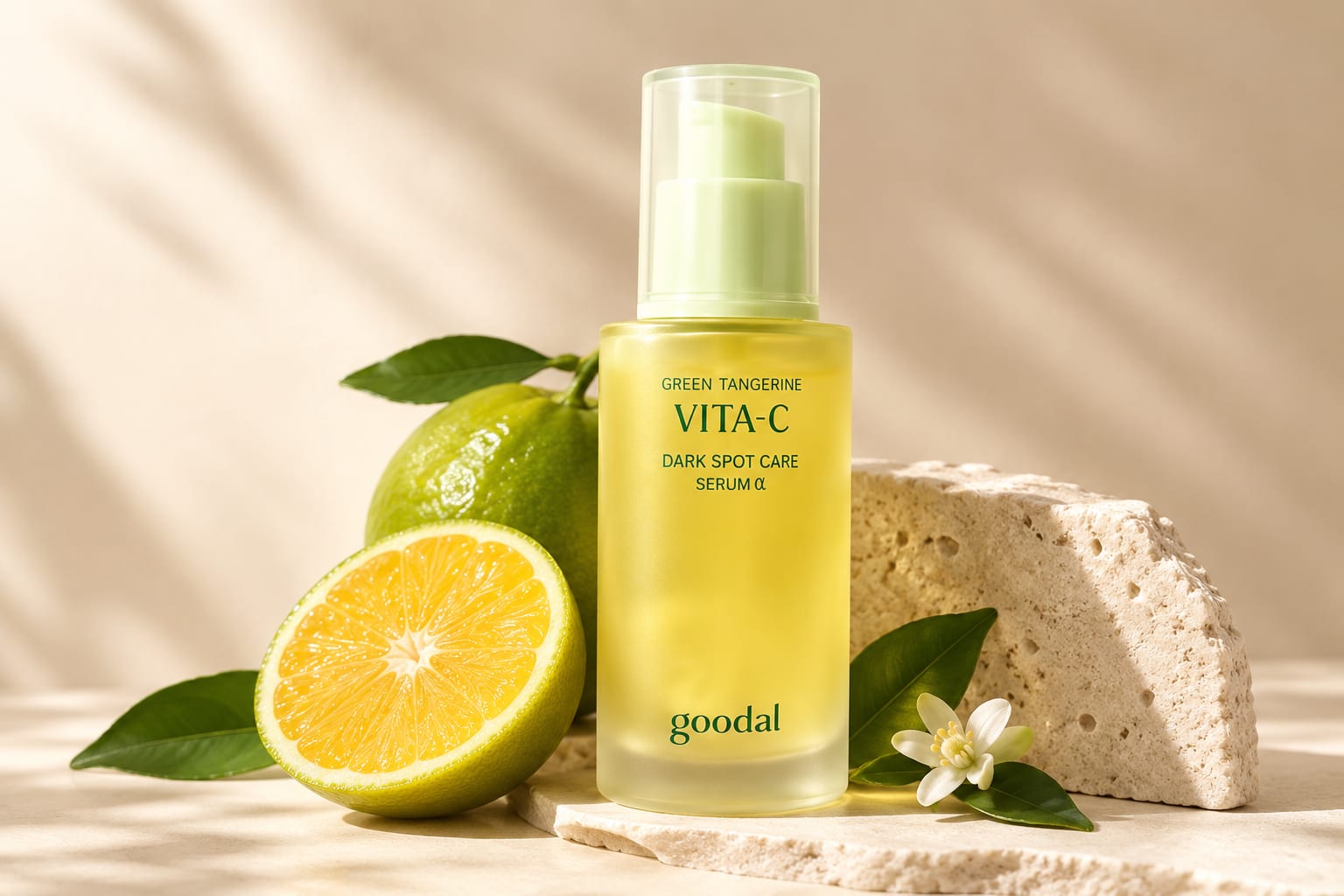
Vitamin C. The ingredient most associated with brightening, and a natural fit for a morning routine as an antioxidant, alongside its relevance to melanin-production pathways. But “Vitamin C” on a label tells you only part of the story. There’s L-ascorbic acid and there are various derivatives, with real differences in concentration, pH, stability, and who they suit. An expensive vitamin C serum isn’t automatically better than a cheap one, and you can’t compare products on percentage alone.
Retinol and retinoids. They affect cell turnover and other skin processes, which makes them relevant well beyond wrinkles - acne, texture, and uneven tone all sit in range. Don’t confuse cosmetic retinol with tretinoin and medical retinoids. These aren’t the same ingredient at different strengths; they’re different molecules with real differences in form, efficacy, and side effects. Tretinoin is a medical treatment and calls for a different level of care.
Hydroquinone. One of the classic ingredients for treating hyperpigmentation, especially melasma, and also a clear example of where the line falls between a skincare product and a medical treatment. How and whether you use it depends on concentration, on the country you’re in, and on medical supervision. In melasma, combination treatments exist that include hydroquinone, tretinoin, and a corticosteroid - this isn’t something you mix together at home; it’s a conversation with a dermatologist.
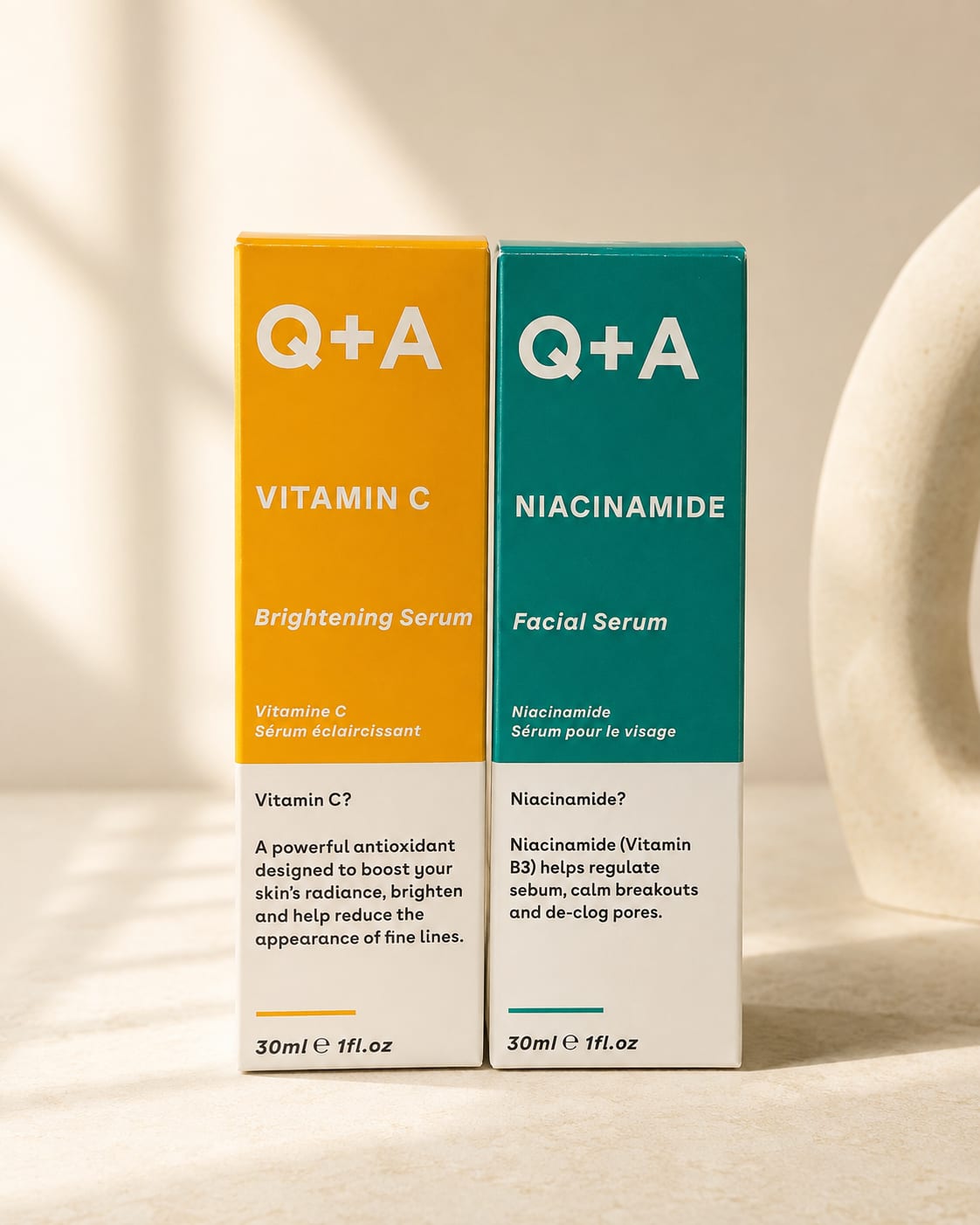
Niacinamide. A great ingredient inside a balanced routine - it can support the barrier and contribute to a more even tone. I’m wary of how marketing has turned it into a cure-all, though. With significant melasma, I’m not building a plan around a niacinamide serum alone. It’s a strong supporting player in a larger system, which is sometimes exactly what you need.
Can you use all of these ingredients together?
In theory you could build a routine with vitamin C, azelaic acid, an AHA, and a retinoid in it. That doesn’t mean you should. The question isn’t “what am I allowed to combine?” but “how much can my skin actually handle?” Vitamin C in the morning, retinol at night, glycolic acid on a different evening, azelaic acid instead of another acid - and two ingredients, used well, can get you excellent results.
Why not start four actives at once? Because you lose control. If your skin starts stinging, you don’t know which product did it. If it improves, you don’t know which product deserves the credit. A routine has to be readable. I’d rather add one ingredient, watch how the skin responds, and only then add the next. Less exciting than buying six serums in one trip, considerably smarter.
Routines by skin type and condition
Basic morning routine: gentle cleanser → vitamin C or another suitable active → moisturizer as needed → SPF. That’s it. No toner, no essence, no second serum. If melasma is the concern, consider a tinted SPF with iron oxides.
Evening routine: for PIH and acne, azelaic acid or a retinoid, depending on what you need. For texture concerns and superficial pigmentation, an AHA on certain evenings. For very sensitive skin, skipping acids entirely in the first phase is often the right call. There’s no universal pigmentation routine. The concern looks similar from face to face; the skin underneath it doesn’t.
Oily skin with pigmentation: two jobs at once - sebum and acne on one side, PIH on the other. Salicylic acid, azelaic acid, or retinoids do more here than an ingredient aimed only at brightening. The mistake is drying the skin out until it “stops being oily.” Dryness and irritation don’t make oily skin healthier.
Dry skin with pigmentation: I’m far more conservative with exfoliation here. If there’s already flaking and tightness, daily glycolic acid becomes too much fast. You want solid hydration, barrier support, and actives at a frequency the skin can actually tolerate. Treating pigmentation doesn’t cancel the need for moisturizer. The opposite.
Sensitive skin: don’t try to overpower a mark with brute force. Find the smallest intervention that still moves the needle. That might be azelaic acid used infrequently, a gentle vitamin C, or a few weeks focused on the barrier alone before any active goes in. Calm skin tolerates a consistent routine far better.
Deeper skin tones: PIH tends to be more pronounced on some deeper skin tones, which makes post-treatment inflammation a real concern - especially with peels, lasers, and other energy-based treatments. Not every device, intensity, or protocol suits every phototype, and a practitioner’s experience with your specific skin tone is part of the treatment.
Pregnancy: pregnancy can trigger melasma or worsen melasma you already have, and it changes the list of ingredients that are safe to use - retinoids being the clearest example of what to avoid. If pigmentation shows up during pregnancy, work with a doctor and confirm which ingredients are appropriate.
Professional peels, laser, and IPL - when are they relevant?
Professional peels are an excellent tool in the right cases, but a medical or professional chemical peel and an at-home acid toner are not the same animal - depth, concentration, acid type, and contact time all vary enormously. And the goal is never “as strong as possible.” With pigmentation, overly aggressive treatment backfires, precisely because of the risk of triggering PIH.
Light- and energy-based treatments (laser, IPL) can be effective on certain types of pigmentation, but they aren’t one-size-fits-all. A sun spot and melasma don’t necessarily respond the same way, and skin tone matters too. Before you spend serious money on a series of treatments, get a proper diagnosis. The device is not the diagnosis.
Why does melasma sometimes get worse after treatment? Melasma is very sensitive to inflammation and light exposure. Treatment that’s too aggressive triggers irritation, and in some cases the initial improvement doesn’t hold. That’s why some doctors prefer a gradual, conservative approach for melasma alongside extremely strict photoprotection. “I’ll just get a laser and it’ll disappear” is a wild oversimplification.
When do I stop buying serums and go see a dermatologist?
When I don’t know what the mark is. When there’s a new or unusual change. When pigmentation is worsening fast. When melasma is significant. When active moderate-to-severe acne keeps generating new marks. When a real stretch of consistent treatment has produced nothing. When prescription medication is on the table. And before any significant professional treatment. A dermatologist isn’t there to hand you “something stronger.” They’re there to confirm you’re treating the right thing.
The most common mistakes in treating pigmentation
The biggest one is buying a serum before you know what kind of pigmentation you’re dealing with. That’s the fast road to an overloaded routine that never addresses the actual concern. Next: treating stinging as proof a product is “working.” It isn’t. A strong acid can be effective without turning skin red. Next: switching products every two weeks. Pigmentation can take months to respond, and you can’t judge anything while you keep swapping out the whole routine. And the biggest of all: treating the mark while ignoring the cause. If acne is still active, if sun exposure keeps darkening the area, or if irritation continues, the treatment will only ever be partial.
Which ingredient fits which situation?
| Condition | What might be relevant | Why |
|---|---|---|
| PIH after acne | Azelaic acid, retinoids, BHA/AHA depending on skin, vitamin C | Treats both the mark and the underlying cause |
| Sun spots | SPF, retinoids, vitamin C, AHA, plus professional treatment as needed | Combines prevention with improvement |
| Melasma | Diligent SPF, sometimes tinted SPF, tailored medical/cosmetic treatment | A complex condition prone to recurrence |
| Sensitive skin | Minimal routine, gentle azelaic acid/well-tolerated ingredients | Preventing new inflammation |
| Deep or stubborn pigmentation | Dermatologist | Over-the-counter products may be limited |
Which is better - vitamin C, azelaic acid, or retinol? They’re not competing. Vitamin C fits a morning routine and can contribute to brightening and antioxidant protection. Azelaic acid is the interesting one when acne and inflammation are in play. Retinoids work more broadly across turnover, acne, texture, and pigmentation. The question isn’t “which is best,” it’s “what’s my skin’s main concern?”
How long before you see real change? Depends on the type of pigmentation, its depth, the ingredient, your consistency, and how well you’ve shut off the trigger. A subtle improvement in tone usually arrives before a significant mark fades. PIH can take months, melasma can improve and come back, and a sun spot might respond far faster to a professional treatment than to anything from a bottle. Which is why I’m a fan of documentation: same lighting, same spot, once a month. Our day-to-day read in the mirror is far less reliable than we think.
The bottom line - pigmentation isn’t a mark, it’s a process
If you take one thing from this guide, take this one. When we see a spot, we fixate on what’s right in front of us and stop asking anything else. Behind that mark is a process - sometimes UV, sometimes inflammation, sometimes acne, sometimes hormones, often several at once. Good treatment doesn’t just “brighten.” It works out what created the pigment, shuts off the trigger as far as possible, encourages existing pigment to fade, and does all of that without causing the skin more damage.
That’s exactly where a simple, precise routine beats an overloaded one: an SPF you’ll actually use, one or two actives suited to your skin, a moisturizer that keeps the barrier stable, patience - and a dermatologist once at-home treatment stops being enough. With pigmentation, the goal isn’t to make your skin work harder. It’s to get every part of the routine pulling in the same direction.
This article is intended as general information and is not a substitute for professional diagnosis or treatment from a licensed dermatologist.