Few beauty products are as closely tied to a brand as lipstick is to MAC.
I’ve worked with MAC lipsticks for years - professionally, on brides, and during my time working with MAC itself - and what has always made the range interesting to me isn’t simply the number of shades.
It’s how differently those shades can behave depending on the formula.
A matte nude and a satin nude may sit next to each other at the counter and create completely different experiences on the lips. One gives you more grip and structure; another gives you movement, comfort and sheen. A sheer formula allows more of your natural lip color to become part of the result, while an opaque formula can transform it almost completely.
That’s why I never think about a MAC lipstick as color alone.
The shade and the finish have to work together.
This guide breaks down MAC’s lipstick finishes, the classic formulas that shaped the brand, the shades I’ve used and loved professionally, and how I’d choose between them today.
Why the finish matters as much as the color
Standing at a MAC counter, color tends to get all the attention.
But two lipsticks that look remarkably similar in the bullet can behave completely differently once you put them on.
Finish affects how opaque the color looks, how much shine it has, how much of your natural lip color shows through, how comfortable the lipstick feels, how frequently you may need to touch it up, and how precisely you need to apply it.
It also changes the character of the shade itself.
A brown-pink in a matte formula can look structured and defined. Put a similar color into a sheer, glossy formula and suddenly it feels softer and much more casual.
So I wouldn’t choose the finish before the color - or the color before the finish.
I’d choose them together.
MAC’s lipstick lineup has changed
If you remember MAC from ten or twenty years ago, many of the shade names will still feel familiar.
The formulas behind them, however, have evolved.
MAC reformulated its classic Matte category into M·A·Cximal Silky Matte, while the Satin family was reworked as M·A·Cximal Sleek Satin.
At the same time, not everything from old-school MAC has disappeared. Retro Matte is still sold in the US, and Frost remains part of MAC’s lipstick assortment.
Lustreglass continues the lineage of the old Lustre-style lipstick, while other formulas and shades have moved, changed or disappeared over the years.
That distinction matters when you find an old MAC recommendation online.
The shade name may still exist. The lipstick attached to that name may not be exactly the lipstick someone reviewed ten years ago.
M·A·Cximal Silky Matte - matte without the old-school drag
This is MAC’s modern answer to the classic matte lipstick.
The idea is straightforward: preserve the saturated color and matte appearance people associate with MAC, but make the formula considerably more comfortable to wear.
MAC currently describes M·A·Cximal Silky Matte as a full-coverage lipstick with 12-hour wear and eight hours of moisture, and the formula includes ingredients such as coconut oil, shea butter and cocoa butter.
Those are the brand’s claims.
What interests me professionally is how the formula actually behaves.
Compared with the traditional dry matte experience many of us associate with older lipsticks, this type of matte gives me considerably more movement. It glides more easily, feels less rigid on the lips and still gives me the strong color payoff I want from a matte.
It’s a useful middle ground for someone who loves the look of matte lipstick but doesn’t necessarily love the feeling of a very dry formula.
The shades I love
This is also where some of MAC’s most recognizable colors now live, including shades I’ve used and loved over the years:
Velvet Teddy, Mehr, Whirl, Kinda Sexy, Taupe and Marrakesh.
Ruby Woo is also available in a M·A·Cximal Silky Matte version - but that doesn’t mean the original Ruby Woo has disappeared.
Retro Matte - when wear matters more than comfort
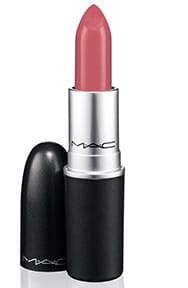
Retro Matte is a very different proposition.
This is the formula I think of when someone wants that unmistakably dry, flat, traditional matte effect with serious grip.
And Ruby Woo still exists in the original Retro Matte formula in the US, even though MAC now also offers the shade in M·A·Cximal Silky Matte.
That distinction is worth knowing because the two versions are not simply identical lipsticks in different packaging.
Retro Matte is the one I’d choose when the traditional ultra-matte effect and wear are the priority.
I wouldn’t choose it because I wanted a plush, moisturizing lipstick.
I’d choose it because I wanted the trade-off:
More grip. Less slip. More commitment to the lip.
That also means preparation matters, particularly if your lips are already dry or flaky.
A matte can only look as smooth as the surface underneath allows it to.
Among the Retro Matte shades that became part of MAC history are Ruby Woo, Flat Out Fabulous, All Fired Up and Relentlessly Red.
M·A·Cximal Sleek Satin - rich color with more movement
If you like the visual impact of an opaque lipstick but don’t enjoy a matte texture, this is where I’d look next.
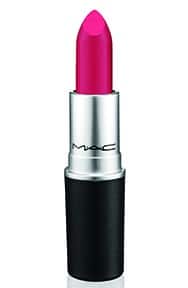
M·A·Cximal Sleek Satin is MAC’s newer interpretation of the classic satin lipstick.
The brand positions it as a full-coverage, pigment-rich formula with a smoother, more comfortable feel and eight-hour hydration.
On the lips, the difference from a matte is obvious.
There’s more slip, more movement and a subtle sheen that keeps the surface of the lip looking alive.
That makes satin one of the most versatile finishes for me.
It can look polished enough for an event without automatically becoming dramatic, and it works just as naturally with everyday makeup.
It’s also a useful finish when I want rich color but don’t want the lip to look completely flat.
Classic MAC shades associated with the satin side of the range include names such as Brave, Faux, Twig, Rebel, Mocha and Paramount, although MAC’s reformulations mean it’s always worth checking the current formula attached to a favorite older shade rather than relying on an old review.
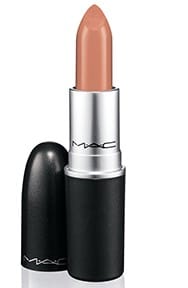
Amplified - when I want the color to arrive immediately
Amplified has long been one of my personal favorites.
What I’ve always liked about it is the combination of rich pigment and a creamier feel.
The color arrives quickly, but without the dry drag of a traditional matte.
That makes it particularly satisfying when I want a bold lip and don’t need the finish itself to be matte.
I don’t expect a creamy lipstick to behave exactly like Retro Matte. That isn’t the point.
I’m choosing it for a different reason: strong color without sacrificing the feel of the formula to get it.
Over the years, shades I’ve particularly loved from this side of MAC include Vegas Volt, Morange, Cosmo, Craving, Dubonnet, Brick-o-la and Fast Play.
Some classic shade/formula pairings have changed as MAC has reorganized the range, so I treat those names partly as my own MAC archive rather than assuming every one is still sold in exactly the version I remember.
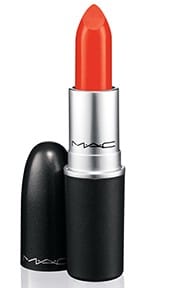
Lustreglass - when you want your lips to remain part of the color
Lustreglass is a completely different kind of lipstick experience.
Rather than covering the natural lip with a dense block of pigment, it gives you a lighter, more luminous result.
That means your own lip color becomes part of what you see.
And that’s important when you’re shopping it.
A sheer pink can look noticeably different on two people because the natural pigment underneath is still influencing the result.
For me, that’s part of the appeal.
Lustreglass works when I want the lip to feel fresh, easy and less constructed - with shine and color, but without the visual weight of an opaque lipstick.
Shades I associate with this softer side of MAC include Hug Me, See Sheer, Syrup, Thanks, It’s M·A·C! and Business Casual.
Frost - the finish that refused to disappear
Frost immediately brings a certain era of MAC to mind.
Pearl. Metallic sheen. Light bouncing visibly off the lip.
It’s very easy to associate that look with the ’90s and early 2000s.
But Frost isn’t simply part of MAC history.
MAC still sells Frost Lipstick in the US.
And that makes the formula more interesting today than writing it off as nostalgia would suggest.
Beauty has moved back toward more visible texture and dimension after years dominated by very flat matte lips. Pearlescent and metallic effects don’t necessarily feel as alien now as they did at the height of the matte era.
Angel remains one of the recognizable names associated with MAC’s Frost assortment, alongside shades such as Plum Dandy, Fabby and “O.”
I wouldn’t choose Frost because I wanted the most natural possible lip.
I’d choose it because I wanted the light to be visible.
And what happened to Cremesheen?
This is where older MAC guides can become confusing.
Cremesheen was one of the brand’s most recognizable lipstick finishes: creamy, comfortable, softer in pigmentation and generally easier on lips than the driest matte formulas.
Creme Cup, Creme in Your Coffee, Crosswires and Shy Girl are names many longtime MAC users will associate with that era.
But I wouldn’t present Cremesheen as one of MAC’s main current US lipstick families today.
It belongs in this guide because it matters to MAC’s lipstick history - and because you’ll still encounter years of reviews, recommendations and swatches referring to it.
If an older MAC shade recommendation sends you looking for a Cremesheen lipstick, check what MAC currently sells under that shade name rather than assuming the original formula is still there.
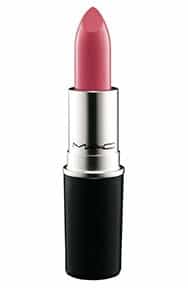
MAC lipstick finishes, side by side
| Formula | Finish | Coverage | Why I’d choose it |
|---|---|---|---|
| M·A·Cximal Silky Matte | Silky matte | Full | Matte color with more comfort |
| Retro Matte | Very matte | High/full | Maximum grip and a traditional matte effect |
| M·A·Cximal Sleek Satin | Satin | Full | Rich color with more movement and sheen |
| Amplified | Creamy | Rich | Bold color without a matte feel |
| Lustreglass | Sheer, glossy | Sheer/buildable | Easy, luminous everyday color |
| Frost | Pearlescent | Varies by shade | Visible sheen and dimension |
The table isn’t a ranking.
There isn’t one “best” MAC finish.
There is simply the finish that makes the most sense for what you want the lipstick to do.
The MAC shades I think are actually worth knowing
MAC has produced an enormous number of lipstick shades over the years.
Some disappeared almost as quickly as they arrived.
Others became so closely associated with the brand that they’re practically part of its identity.
These are the ones I think are worth knowing - either because I’ve used them repeatedly myself or because they became genuinely important MAC shades.
Velvet Teddy - the nude that became a phenomenon
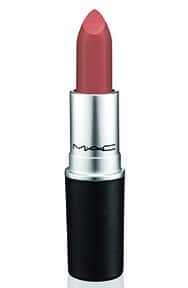
Velvet Teddy is one of those MAC shades that moved beyond being simply another nude.
It’s a beige-brown nude with enough depth to define the lips without automatically making them the focus of the face.
What I like about it is its versatility.
It can sit underneath a much stronger eye without competing with it, but it has enough presence that the lips don’t disappear.
Like every nude, though, it changes significantly depending on the person wearing it.
On one complexion it may read soft and balanced. On another it may become considerably warmer, browner or lighter than expected.
That’s why I never describe any nude as universally flattering.
Your natural lip color is part of the shade.
Ruby Woo - the red that became MAC
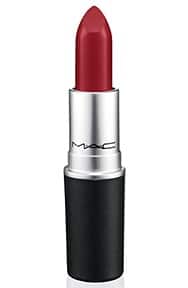
If there’s one lipstick shade inseparable from MAC’s identity, it may be Ruby Woo.
It’s a vivid red with a cooler direction, and the original Retro Matte version gives it that extremely crisp, unmistakably matte appearance.
It is also a lipstick that asks something of the wearer.
The original Retro Matte formula is dry.
If I’m using it, I prepare the lips accordingly.
Today, the interesting part is that Ruby Woo exists in more than one MAC formula, including M·A·Cximal Silky Matte.
So if you love the color but have never loved the feel of the original, you no longer necessarily have to choose between the two.
Mehr - one of my favorite bridal pinks
Mehr is one of the shades I return to again and again when I want a muted rosy lip.
And it has been particularly useful to me in bridal makeup.
It gives the lip definition without automatically turning the lipstick into the focal point of the face.
But I wouldn’t call it “the pink almost everyone can wear.”
No lipstick works that way.
The result depends on skin tone, undertone and - particularly with lip products - the natural pigment already in the lips.
Mehr is a shade I recommend often. It isn’t a shade I recommend blindly.
Whirl - when a nude needs more depth
Whirl became famous first as a lip pencil before the shade expanded into lipstick.
Its brown-pink character gives it more weight than a very pale nude.
That’s exactly why I like shades in this family: the lip can still feel neutral without disappearing into the complexion.
It’s particularly useful when a traditional beige nude feels too pale or too disconnected from the rest of the makeup.
Kinda Sexy - the peachier nude
Kinda Sexy moves in a warmer, peachier direction.
I particularly like this kind of shade next to a stronger eye because it gives the lips color without asking them to compete for attention.
Again, I wouldn’t assign it to one rigid skin-tone category.
Try it on the lips.
The natural pigment underneath can change it substantially.
Brave - the lipstick I don’t have to overthink
Brave is one of those pink-nude shades that makes sense when I want a polished lip without creating an obvious lipstick statement.
That versatility is what makes a shade useful professionally.
There are colors I love because they’re spectacular.
And there are colors I love because I know exactly what job they’ll do.
Brave belongs much more to the second category for me.
Rebel - when the lip is allowed to be the story
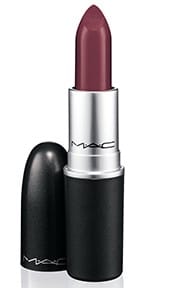
Not every lipstick needs to disappear quietly into the makeup.
Rebel is proof of that.
Its rich plum direction gives the face instant presence and makes much more of a statement than the nudes and muted pinks I often use in bridal work.
When I use a lip this strong, I make that decision deliberately and build the rest of the makeup around it.
Diva - the deep red
Diva belongs to the darker, more dramatic side of MAC.
A deep burgundy-red changes the balance of the entire face, so I don’t treat it as simply “another red.”
When the lip has that much visual weight, I usually think carefully about what the eyes and cheeks are doing around it.
That’s what makes dramatic lipstick work for me.
Not just choosing the shade - giving it room.
Marrakesh - warmth without becoming a conventional nude
Marrakesh is one of my favorite examples of a neutral-ish lip that still has personality.
The terracotta-brown direction gives it warmth and character without pushing it into a classic bright red or orange.
It’s the kind of shade that can transform depending on the complexion underneath it, which is another reason I’d always swatch it on the actual lips before buying.
Taupe - more useful than its name suggests
Taupe is another shade I’ve found enormously useful.
Despite the name, I don’t think of it as a gray lipstick.
It’s a brown-based neutral with enough depth to shape the lips and enough restraint to work alongside much stronger eye makeup.
It’s a good example of why shade names only tell you so much.
The face tells you the rest.
If I could only keep five
If I had to reduce years of MAC lipstick to five shades covering very different jobs, my personal edit would be:
- Velvet Teddy - the nude.
- Ruby Woo - the classic red.
- Mehr - my soft rosy option.
- Brave - the easy everyday pink-nude.
- Marrakesh - warmth and character.
Not because those five will suit every person.
They won’t.
They’re the five I’d want available to start building from.
Michal’s tip: There’s really no such thing as “the most beautiful lipstick.” I can put the same shade on two women and get two surprisingly different results. Skin tone matters, undertone matters, the rest of the makeup matters - and natural lip pigment matters enormously. Instead of starting with Which shade is the prettiest?, I start with What do I want the finished face to feel like? That makes both the color and the finish much easier to choose.
Why skin-tone lipstick rules only get you so far
You’ll find endless lists online telling you that fair skin should wear one group of shades, olive skin another, and deep skin another.
I think those lists can be useful as inspiration.
I don’t think they should be treated as rules.
Lipstick is particularly difficult to predict because the color underneath it isn’t a blank canvas.
Your lips already have pigment.
Two people with a similar skin depth can therefore put on exactly the same semi-sheer lipstick and get noticeably different results.
Undertone changes things too, as does the makeup around the mouth.
A lipstick that feels surprisingly strong on a bare face may suddenly make perfect sense once the eyes, cheeks and brows are finished.
So rather than giving you a rigid chart, this is my rule:
Use skin tone as context, not permission.
If a color interests you, try it.
And whenever possible, try it on your lips rather than only on your hand.
The MAC lipsticks I reach for in bridal makeup
This is where my relationship with MAC lipstick becomes much more specific.
With a bride, I’m not choosing the lips in isolation.
The color has to make sense with the complexion, eyes, dress, hair and - most importantly - the way she wants to see herself.
It also has to photograph beautifully at close range and in different lighting.
I tend to use natural or softly defined lip colors more often than very dramatic ones because I usually want the whole face to remain balanced.
Among the MAC shades I’ve reached for repeatedly in bridal work are:
Mehr, Brave, Velvet Teddy, Kinda Sexy, Faux and Twig.
But that list is never where the decision ends.
I’ve had brides who want barely-there lips and brides who want a red lip.
My job isn’t to decide what a bride is supposed to look like.
It’s to understand what she wants and then choose the color and formula that will get us there.
What I choose when lips are dry
When lips are dry, formula becomes particularly important.
A very flat matte can make existing flakes and texture much more visible.
That doesn’t mean dry lips are “not allowed” to wear matte lipstick.
It means I prepare them differently - and sometimes I decide that another finish will simply give me the result I want more easily.
For someone prioritizing comfort, I’d look first toward Lustreglass or M·A·Cximal Sleek Satin rather than Retro Matte.
M·A·Cximal Silky Matte gives you another option when you want the visual effect of a matte without going all the way to the traditional Retro Matte feel.
And whatever formula I use, I’m not trying to exfoliate the lips into submission.
Gentle preparation is enough.
Do you need a lip liner?
Not always.
But professionally, I use one often.
A liner can sharpen the lip shape, correct small asymmetries, create a cleaner border and give me another layer of color underneath the lipstick.
I also sometimes use liner over more of the lip rather than restricting it to the edge.
What I don’t think is necessary is matching the lipstick and liner perfectly.
A slightly deeper liner can add dimension beautifully, provided I blend the transition rather than leaving an obvious ring around the mouth.
The liner is part of the lip look.
It shouldn’t look like scaffolding around it.
Michal’s tip: One of the easiest ways to buy the wrong lipstick is to fall in love with it in a photograph. Lighting, editing, the model’s complexion and her natural lip pigment can all change the way a shade appears. If you can, try lipstick on your actual lips. A hand swatch tells me about color and texture. It doesn’t tell me exactly what that lipstick will become on your face.
Frequently asked questions about MAC lipstick
Which MAC lipstick do I recommend most?
There isn’t one.
If you want a nude, I might start with Velvet Teddy. For a muted pink, Mehr or Brave. For a classic red, Ruby Woo. For something warmer and more distinctive, Marrakesh.
But I’d still choose according to the person rather than the popularity of the shade.
Which MAC lipstick lasts the longest?
Among the traditional bullet formulas discussed here, Retro Matte is the one I associate most strongly with grip and longevity.
That durability comes with a drier feel, so whether that’s an advantage depends entirely on what you want from your lipstick.
What’s the difference between Retro Matte and M·A·Cximal Silky Matte?
They can both give you a matte lip, but they’re very different experiences.
Retro Matte is the more traditional, drier, grippier formula.
M·A·Cximal Silky Matte was designed to deliver the matte look with considerably more comfort and moisture.
Ruby Woo is particularly useful for understanding the difference because MAC currently offers versions of that iconic shade in both formula families.
Which MAC finish is better for dry lips?
If comfort is the priority, I’d start with Lustreglass or M·A·Cximal Sleek Satin.
If you specifically want matte, M·A·Cximal Silky Matte is the more obvious place to begin before moving toward the drier Retro Matte experience.
Are MAC lipsticks good for bridal makeup?
They’ve been part of my professional bridal work for years.
What I value most isn’t simply that MAC has famous shades. It’s that the range gives me very different colors, levels of opacity and finishes to work with.
For brides, I frequently reach for softer shades such as Mehr, Brave, Velvet Teddy, Kinda Sexy, Faux and Twig - but the final choice always depends on the bride.
Does lipstick transfer when you eat or drink?
Traditional bullet lipstick generally transfers and fades to some degree when you eat and drink.
The amount depends on the formula, what you’re eating, how much product you applied and what you used underneath it.
I expect a creamy or glossy lipstick to need more attention than a grippy matte.
That isn’t necessarily a flaw.
It’s part of choosing the finish.
Should you fill the whole lip with liner first?
You can.
I sometimes do it when I want the liner to contribute to the color, structure or wear of the finished lip.
But I don’t think every lipstick application needs to become a multi-step system.
Technique should solve a problem.
If there isn’t a problem, I don’t add steps just because I can.
Are MAC lipsticks scented?
MAC lipsticks are well known for the brand’s characteristic vanilla scent, but formulas and ingredient lists can change.
If you’re sensitive to fragrance, check the current ingredient information for the specific formula you’re considering rather than assuming every MAC lipstick is identical.
Does MAC still make all of its classic shades?
No.
The lipstick range has evolved substantially over the years. Some shades have disappeared, some remain, and others have been moved into reformulated lipstick families.
That’s why I always check the current MAC assortment before treating an older shade/formula pairing as current.
My takeaway
MAC lipstick has survived decades of beauty trends because it was never really one lipstick.
That’s the point.
Ruby Woo and Hug Me don’t have the same job.
A Retro Matte and a Lustreglass aren’t competing to give you the same experience.
And Velvet Teddy in a modern matte formula isn’t interesting simply because Velvet Teddy is a famous shade.
Color and formula work together.
After years of using MAC professionally, that’s still the way I choose lipstick.
I think about what I want the lips to contribute to the finished face.
Do I want them soft? Defined? Glossy? Matte? Barely there? The focal point?
Then I choose the finish and the color that will get me there.
The best MAC lipstick isn’t necessarily the bestseller, the most iconic shade, or the one going around social media this month.
It’s the one that does the job you actually want your lipstick to do.