
MAC eyeshadows have been a fixture in professional makeup kits for decades. Collections come and go, formulas evolve, and beloved shades sometimes disappear, but the brand’s classic eyeshadows still offer one of the best lessons in something that’s easy to overlook: finish can change an eye look almost as much as color.
Two shadows can look remarkably similar in the pan and behave completely differently on the lid. One may blend into a soft haze, another may reflect enough light to emphasize texture, and another may deliver dense color almost immediately.
That difference isn’t just about shade. It’s about formula and finish.
After years of working with MAC eyeshadows - both professionally and during my time with MAC - these are the classic finishes I think are worth understanding, the shades I’ve loved working with, and how I’d choose between them today.
Why finish matters as much as color
Most of us start with color: brown, taupe, pink, bronze. But finish has an enormous influence on what that color actually does once it reaches the eye.
It affects how opaque or sheer the shadow appears, how easily it builds and blends, how much light it reflects, and how prominently it shows the natural texture of the lid.
That’s why two taupes - or two browns - can create completely different looks.
Rather than choosing finish first and color second as a hard rule, I think about the two together: What effect do I want, and where am I putting it?
Matte - the workhorse
A good matte is one of the most useful formulas in an eyeshadow collection.
I use mattes constantly in professional makeup because they let me create shape and depth without adding reflection. They’re particularly useful through the crease, at the outer corner, along the lash line, and anywhere I want the eye to look defined rather than illuminated.
They’re also often my first choice when I’m working on a lid with visible texture. That doesn’t mean mature skin can’t wear shimmer - it absolutely can. But a matte gives me much more control over where light and attention go.
The classic MAC mattes I still love
Swiss Chocolate is a beautiful warm brown for creating soft depth.
Quarry is one of those wonderfully understated transition shades that can quietly pull an entire eye look together.
Embark gives deeper definition at the outer corner and works beautifully when pressed along the lash line.
Espresso, Soft Brown, and Wedge are other MAC shades I’ve reached for repeatedly over the years.
Some classic shades remain available in MAC’s US assortment, while others have moved in and out of the lineup over time. That’s worth keeping in mind when you come across older MAC recommendations online.


And yes, I use MAC eyeshadow on brows
One of the reasons I’ve kept certain MAC mattes around for so long has nothing to do with eyes.
A fine, shine-free powder can work beautifully through the brows when the shade is right. It allows me to fill sparse areas softly without creating the heavier, more obviously drawn-on effect that can happen with some pencils.
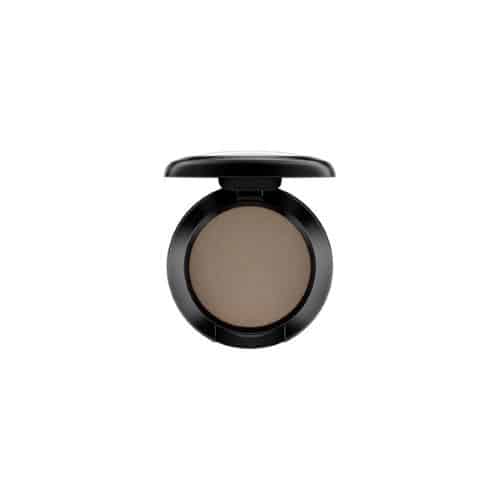
Omega gives a soft ash-taupe effect that can work particularly well with lighter, cooler hair.
Coquette has more depth and a cool, ashy brown character.
Charcoal Brown works beautifully when I need a medium cool brown, while Brun gives considerably more depth.
For warmer hair, Wedge has long been one of the shades I like.
Michal’s tip: I generally avoid making the brows dramatically darker than the hair. A slightly deeper shade can add definition, but too much contrast can quickly make the brow look heavier than the rest of the face - especially in daylight photography.
Satin - the quiet middle ground
Satin is one of the finishes I’ve always loved because it sits somewhere between a flat matte and an obviously reflective shadow.
Rather than announcing itself as shimmer, it gives the eye a little movement when the light hits it.
That makes this kind of finish particularly useful for bridal makeup and for anyone who wants dimension without a visibly glittery lid. I also like controlled sheen on mature eyes because I can decide exactly where I want the light rather than avoiding luminosity altogether.
Among the shades I’ve loved working with are Brulé, Shroom, Sushi Flower, Coquette, and Brun.
Sushi Flower, in particular, brings a beautiful pink brightness to an eye look without feeling predictable.

Frost - when you actually want the light
Frost is a very different proposition.
This is where reflection becomes part of the look: more pearlescent, more dimensional, and considerably more noticeable than Satin.
Classic shades such as Amber Lights, Satin Taupe, Bronze, Cranberry, Humid, and Creme de Violet are a huge part of what many longtime MAC users remember about the brand.
I still love what this type of finish can do - I’m simply more deliberate about placement.
On a lid with visible fine lines or texture, I usually concentrate a highly reflective shadow where I actually want light rather than automatically taking it across the entire lid. Often, that means the center of the eye.
That distinction matters: texture doesn’t mean shimmer is off-limits. Placement matters more than rules.

Lustre - a wash of light
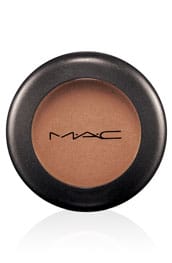
Lustre was never about dense, immediate color.
Its appeal was the lighter, more sparkling effect - the kind of finish you could build rather than laying down as a solid block of pigment.
That could also make it a little less straightforward to work with.
How I work with it
When I want more impact, I like using a slightly damp brush. MAC Fix+ has long been one of my go-to options because it helps me pick up the shadow more effectively and gives me greater control over fallout.
Tempting, Aquadisiac, and Swimming are among the shades I remember from this family.
Tempting, unlike some of the classics that remain in the assortment, is now explicitly listed by MAC as discontinued.

From the archive: Veluxe
Veluxe is one of the older MAC textures I remember working with: matte in appearance, but softer and more velvety than a traditional matte.
What I liked about it was the ease of blending. When I wanted definition without an aggressively dense matte effect, it gave me room to build gradually.
Kid and Brown Down are two shades I particularly liked.
I don’t see Veluxe listed as a standalone finish in MAC’s current US eyeshadow lineup, so I think of this one as part of the brand’s formula archive rather than a finish I’d tell you to shop for today. MAC’s current US lineup does, however, continue to include Veluxe Pearl.

Veluxe Pearl - one of MAC’s great textures
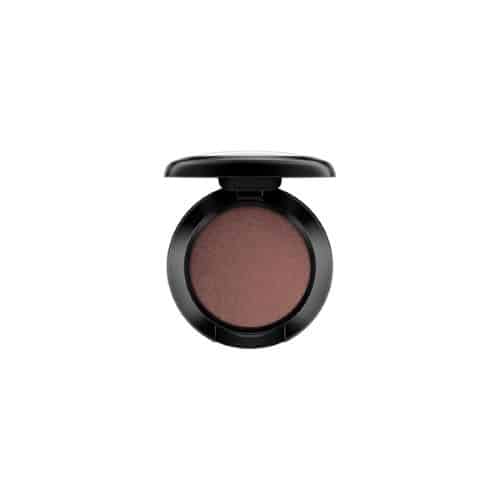
If there’s one classic MAC finish I particularly enjoyed working with, it’s Veluxe Pearl.
It combines strong color payoff with sheen and a smooth, almost creamy-feeling texture that makes it unusually satisfying to apply. You get richness and dimension without the finish becoming chunky or overtly glittery.
The shade list alone explains why this formula became so memorable:
Woodwinked. All That Glitters. Twinks. Coppering. Expensive Pink. Plum Dressing. Stars ’N’ Rockets.
For longtime MAC fans, some of those names barely need an introduction.
Several of those classics remain part of MAC’s current US offering, including Woodwinked, All That Glitters, Expensive Pink, and Stars ’N’ Rockets.

Which finishes work best on mature lids?
There isn’t one universal “mature-skin finish.”
That distinction is important.
When I work on an eye with more visible texture, I generally rely most heavily on mattes and controlled satin finishes because they give me greater control over reflection.
But I don’t automatically eliminate shimmer.
A beautifully placed reflective shadow can bring light to the eye at any age. I’m simply more selective about where I put it. A Frost or another luminous formula concentrated on the center of the lid can look beautiful; taking a highly reflective texture over every fine line may produce a very different effect.
So the question isn’t really Can mature skin wear shimmer?
It’s where do you want the light?
Which classic MAC eyeshadows can you still buy?
One of the surprises in revisiting MAC’s eyeshadow archive is how many familiar names are still around.
At the time of publication, MAC’s US assortment includes classics such as Omega, Coquette, Charcoal Brown, Brun, Wedge, Swiss Chocolate, Embark, Espresso, Soft Brown, Brulé, Shroom, Amber Lights, Satin Taupe, Woodwinked, All That Glitters, Expensive Pink, Cranberry, and Stars ’N’ Rockets, among others.
Some classics also continue to appear in MAC’s newer palettes. For example, the brand identifies Satin Taupe as Frost and Wedge as Matte in its Connect In Colour Unfiltered Nudes palette, while other current palettes include familiar shades such as Amber Lights, Embark, and Coppering.
Others are genuinely gone. Tempting, for example, has an official MAC page identifying it as discontinued.
And then there are older favorites I remember working with that I couldn’t verify in MAC’s current US assortment. I’d rather treat those as archive shades than call them discontinued without confirmation.
That distinction matters. This isn’t meant to be a nostalgia list. It’s a guide to understanding what the finishes actually do - including the classics you can still shop today.
Michal’s tip: After working with hundreds of MAC eyeshadows over the years, the lesson I keep coming back to is simple: finish changes the result almost as much as color. If I were building an eyeshadow collection from scratch, I’d start with excellent mattes and a few controlled satin or luminous textures, then add more reflective finishes where they genuinely add something. You don’t need dozens of shadows. You need formulas that do different jobs.
The bottom line
MAC’s classic eyeshadows earned their place in makeup history because the range was never simply a wall of colors. The differences in texture and finish gave makeup artists an enormous vocabulary to work with.
The lineup has evolved, and some of the shades I loved are now part of MAC history while others are still sitting in the assortment decades later.
But the underlying lesson hasn’t changed.
Don’t look only at the color in the pan.
Look at what the formula does with it.


