Sooner or later, anyone with sensitive skin stops getting excited about promises. Words like “glow,” “renewal,” “anti-aging,” and “results in seven days” stop landing. Experience teaches you that the first question isn’t what a product claims to do. It’s how your skin is going to feel once it’s on.
Will it sting? Will it go red? Will the lovely feeling on night one turn into dryness, flaking, or irritation by the end of the week? Will you end up shelving something nearly new and far from cheap, because your skin decided it wasn’t having it?
I know that place well.
My skin is very sensitive - the kind that won’t let me be casual about what goes on it. I’ve tried products that were excellent on paper, from good brands, in formulas with glowing reviews, and my skin was unmoved by any of their reputations. Some burned. Some were just uncomfortable. Some looked wonderful the first night and fell apart over a sustained routine.
Working as a makeup artist puts me around products constantly. I test textures, I watch how skincare behaves under makeup, I work on dry skin, oily skin, mature skin, dehydrated skin, and sensitive skin, and I see again and again how much prep decides the finish. That exposure is exactly why I don’t hand out personal recommendations lightly. A product that makes it into my house doesn’t necessarily stay there.
So a product I buy again and again, year after year, means far more to me than a first impression or a trend cycle. A lot of those products happen to be Clinique.
Not every Clinique product works for me. No brand suits every skin, and sensitive skin isn’t one flat category either. But a handful of Clinique products pull off something that matters more to me than any dramatic promise: they let me take care of my skin without feeling like I’m fighting it.
This isn’t a sponsored article and it isn’t a catalog review. It’s a routine built out of long personal experience, with the Clinique products I know, love, and keep going back to.
First things first: is Clinique actually hypoallergenic?
Clinique has been associated with the phrase “Allergy Tested” for years, and the brand’s site states that every formula is allergy tested and fragrance-free. As of this writing, the brand reports having conducted more than six million allergy evaluations, and says that if a reaction occurs during testing, the formula is re-evaluated.
That’s a genuinely impressive policy. It’s also worth understanding exactly what it says and, just as much, what it doesn’t.
“Hypoallergenic” vs. “Allergy Tested”
The term “hypoallergenic” is not a promise that a product will never cause a reaction in anyone. In fact, the FDA has been explicit that there is no single, standardized regulatory definition or required standard for the term “hypoallergenic” in the United States. So it shouldn’t be treated as a medical seal that guarantees a perfect fit for every person.
“Allergy Tested” is a more precise phrase in Clinique’s case: it refers to products having been tested according to the company’s own protocols, aimed at reducing the risk of a reaction. It doesn’t mean you can’t be sensitive to a specific ingredient, and it doesn’t replace your own personal patch test.
That distinction matters most in an article about sensitive skin. I can tell you the products here worked well on mine. I can tell you some have been with me for years, and that other products in the same categories haven’t always worked out. I can’t promise that a product which didn’t irritate me won’t irritate you.
Every face comes with a different history, different sensitivities, and a barrier in a different state. My experience still carries real weight, though: precisely because my skin reacts so easily, anything that survives in my routine long-term without stinging and without feeling like a fight has earned serious credit.
Why fragrance-free matters on sensitive skin
Clinique’s real strength here isn’t only the allergy testing. It’s that the brand’s skincare is formulated fragrance-free.
Fragrance isn’t a problem for everyone, but for some people it’s a source of irritation or allergy. The American Academy of Dermatology recommends that people with dry or sensitive skin look for products labeled “Fragrance-Free,” and it specifically points out that “Unscented” isn’t necessarily the same thing - a product that doesn’t smell like anything can still contain fragrance ingredients added specifically to mask other scents.
On sensitive skin, any non-essential ingredient is a fair question mark. I love a good scent. I work in a world where the sensory experience, the packaging, and the texture are part of the pleasure. On my own face, though, I’d rather a cream be pleasant because of how it feels than because of what’s been added to make it smell.
A fragrance-free product can still carry a subtle natural scent from the raw ingredients themselves, which isn’t the same as added fragrance. So when I say something smells nice or clean, that’s my experience of it, not a claim about the formula.
Step one: getting the day off your face
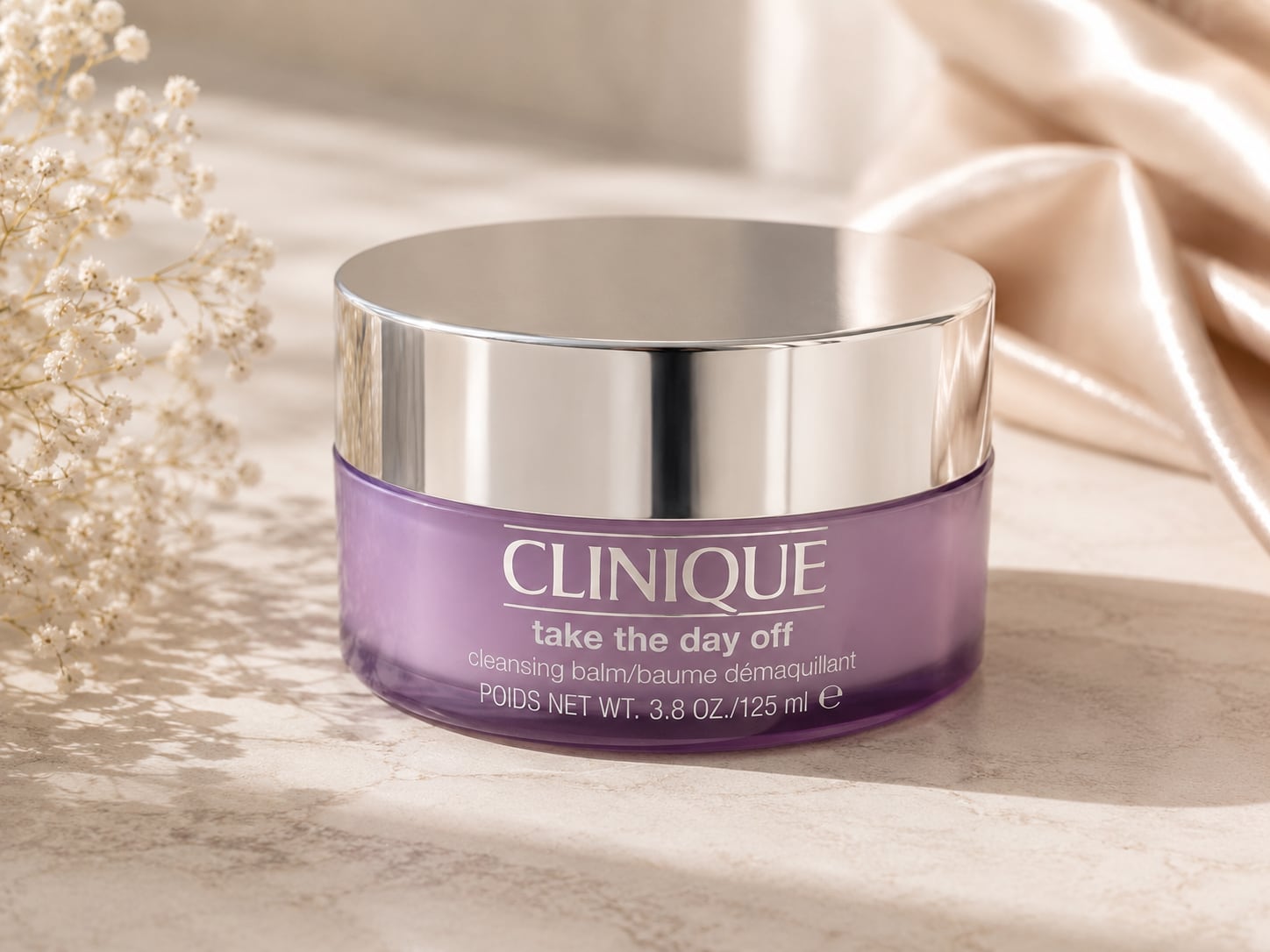
Take The Day Off Cleansing Balm
Some products we love because they feel indulgent. Some we respect because they work. And a few change an entire habit. Take The Day Off Cleansing Balm is in that third group for me.
Before cleansing balms, taking off makeup could feel like a chore: another pad, another product, another pass over the eyes, another go at the residue clinging to the lash line. On sensitive skin that isn’t just tedious. The friction adds up until the end of the day feels like an assault on your face.
This balm changed how I remove makeup because I’m no longer chasing makeup around my face. It goes onto dry skin, I massage gently, and I give it time to melt through makeup, sunscreen, and eye makeup.
The product starts as a solid, silky balm. On contact with the warmth of your hands it softens into an oily texture, and once you add a little water it emulsifies and rinses away. Clinique states that it’s formulated to dissolve makeup and SPF, that it’s suitable for sensitive skin and eyes, that it’s been tested by ophthalmologists and dermatologists, and that it’s non-comedogenic. One of the key ingredients the brand highlights is safflower seed oil, an emollient rich in linoleic acid that helps dissolve oil and makeup while leaving skin and lashes feeling comfortable.
Why a balm suits sensitive skin so well
The advantage isn’t raw removal power. It’s less friction. Long-wear makeup is engineered not to budge over a full day - that’s why we buy it, and it’s exactly why brute force is the wrong way to take it off. A product that dissolves that stubborn layer lets you work slowly and gently instead of scrubbing the same spot over and over with a pad. Around the eyes it matters even more, where the skin is thinner and every tug on the lid or drag along the lash line buys you irritation you didn’t need.
How I use it
I scoop out a small amount with a clean spatula. It comes in a jar, and I’d rather not dip my fingers in night after night - that’s not a Clinique instruction, just a habit that keeps the product clean and pleasant over the life of the jar.
It goes onto dry skin and I massage in slow circles. Around the eyes I don’t start rubbing immediately. I let it sit a few seconds to soften the mascara and liner, then massage gently. Then I wet my hands slightly, keep massaging until the texture turns milky, and rinse with lukewarm water.
A soft washcloth afterward is fine, as long as it’s clean and not rough. Wash a reusable cloth often - there’s no sense investing in a gentle cleanser and then dragging a cloth full of old oil and makeup residue across your face.
Does it leave skin oily?
Not on mine. The texture is oily during the massage, but the balm emulsifies and rinses clean. It doesn’t leave the tight feeling I associate with harsh cleansers, and it doesn’t leave a heavy film either.
If you like double cleansing, follow it with a water-based cleanser. I don’t think everyone needs to double cleanse every night. It depends on how much makeup you had on, your sunscreen, your skin type, and how your skin feels after you rinse. On sensitive skin, over-cleansing causes as many problems as under-cleansing.
What I love about it
It turns makeup removal from an aggressive act into a calm one. At the end of a long day, especially after a full face, I don’t want to stand at the mirror wrestling my mascara. I want to feel the day come off along with the makeup - no stinging, no tugging, no red skin left behind.
This is one of those products I can sum up simply: excellent, excellent, excellent. Not because it does anything dramatic to skin, but because it does a basic, everyday task so well that I don’t feel any need to look for a replacement.
Who it’s for
- Anyone who wears makeup regularly.
- Anyone in long-wear makeup or sunscreen.
- Anyone who struggles with friction and irritation at removal.
- Normal, dry, combination, or sensitive skin.
- Anyone who’d rather rinse a product off with water than work through a stack of cotton pads.
Who it’s not for
If oily textures bother you, even ones that rinse clean, a liquid makeup remover is the better call. And the jar packaging does ask for a little more attention to hygiene.
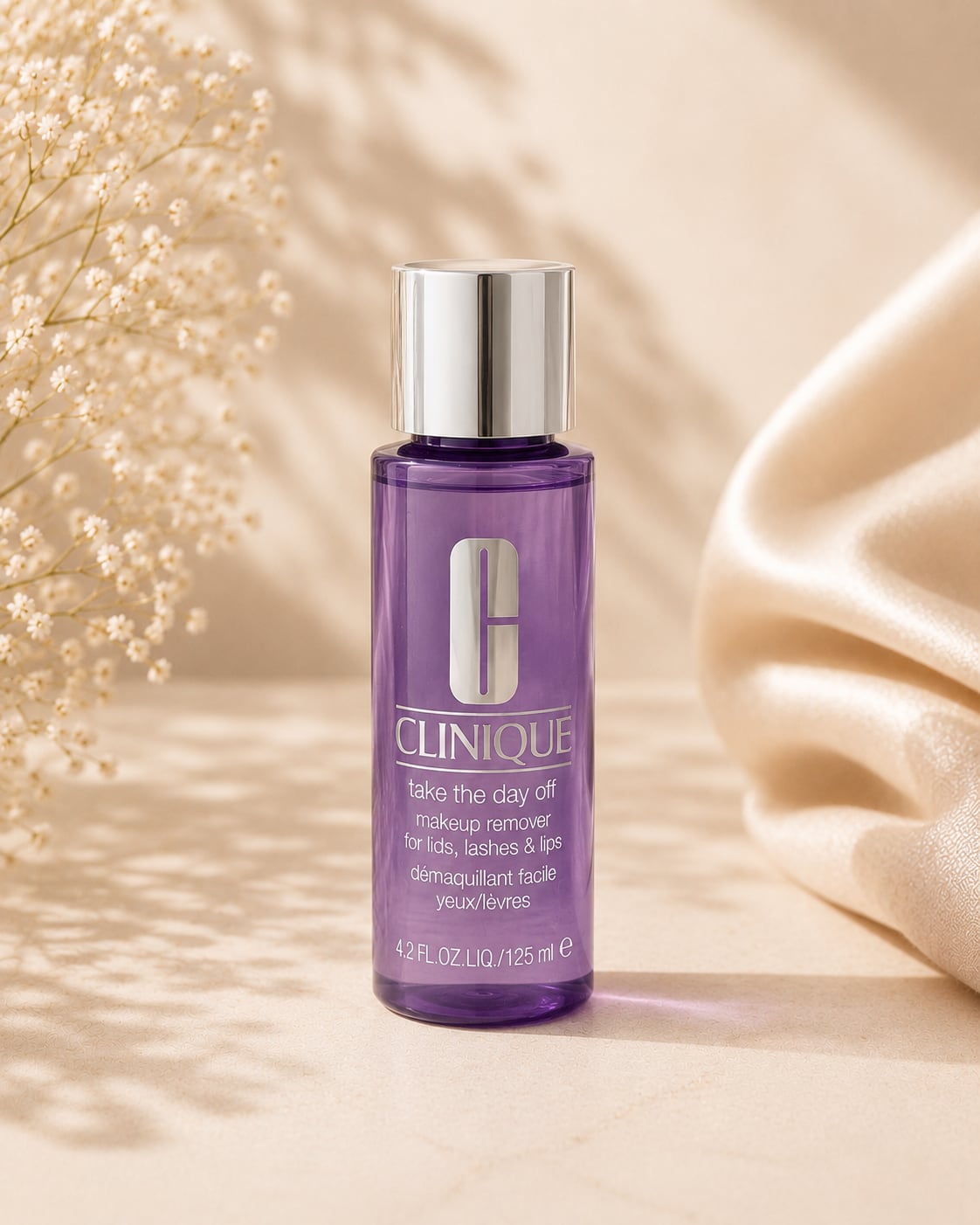
even a product labeled safe for sensitive eyes shouldn’t get directly into the eye itself. If you experience ongoing stinging, blurred vision, or redness, rinse and stop use.
Step two: the green formula that changed how my skin feels
Clarifying Lotion 1.0 Twice A Day Exfoliator
This is the product in this piece that needs the most precision. For years I called it “my green toner.” That description is wrong on both counts, and it isn’t a classic refreshing toner either.
Clarifying Lotion 1.0 is a gentle liquid exfoliating treatment formulated for dry, sensitive skin. Clinique describes it as an especially gentle, alcohol-free version designed to sweep away flakes and dead skin cells and prep skin for the moisturizing step. It’s part of Clinique’s 3-Step System: cleanse, exfoliate, moisturize.
It’s also the only member of the Clarifying Lotion family that’s lasted in my routine. The versions in that line are not interchangeable - they’re formulated for different skin types, and some contain drying alcohol. What sets 1.0 apart is that it’s alcohol-free and built for more sensitive skin. Don’t grab a different bottle because it looks similar or carries a nearby number on the label.
What it actually does
The surface of your skin is partly made up of cells that have reached the end of their life cycle and shed gradually. That happens naturally at every age. The body doesn’t “stop” renewing skin at 25, and there’s no age at which the mechanism switches off.
What does change with age, with the state of the barrier, with sun exposure, and with other factors is the pace and function of that turnover. Dead cells building up on the surface can leave texture looking duller or rougher, and can keep skincare and makeup from sitting as well as they should.
A gentle exfoliant doesn’t “replace” skin, and it isn’t meant to strip away deeper layers. Its job is to gently help release the cells sitting in the outermost layer that are already on their way off anyway. That distinction isn’t a semantic quibble, either. Sensitive skin doesn’t need to be forced into peeling. It needs help that leaves the barrier protecting it completely intact.
My experience with it
I’ve used this for years. After cleansing, I sweep it gently over my face with a cotton pad. I don’t scrub, I don’t go over one area ten times, and I don’t hunt for dirt on the pad as proof it’s working.
Used consistently, my skin feels smoother, cleaner, and noticeably softer. When I say it leaves me with “baby-soft skin,” that’s my own shorthand for how it feels, not a claim about changing skin’s biological structure.
It’s one of the very few products in this category that never burns me. That counts for a lot, because my skin has no patience for actives.
Do you really need it twice a day?
Clinique markets it for twice-daily use as part of the 3-Step System. On sensitive skin, though, I don’t think you should lock into a fixed frequency just because the label recommends it.
Sensitive skin should set the pace.
Start once a day, or even a few times a week, and watch what your skin does. Dryness, stinging, or rising sensitivity means cut back or stop. Nobody hands out prizes for using more.
anyone dealing with rosacea, eczema, active seborrheic dermatitis, a compromised skin barrier, or dermatological treatment should be especially careful with any exfoliating toner, even one labeled gentle.
It doesn’t finish your makeup removal for you
This product does not replace cleansing. Makeup showing up on the pad isn’t proof it’s cleansing well - more often it’s proof the first step didn’t get everything. The balm removes makeup. The liquid exfoliant does its own job, sweeping gently over skin that’s already clean.
Step three: the right kind of hydration, not just a moisturizer
Clinique gives you more than one answer to the word “hydration,” and that’s a real strength. Skin that’s low on water doesn’t automatically need a heavy cream, and dry skin won’t necessarily be satisfied by a light gel. The same face can want something different in summer, in winter, before makeup, or after a rough stretch of irritation.
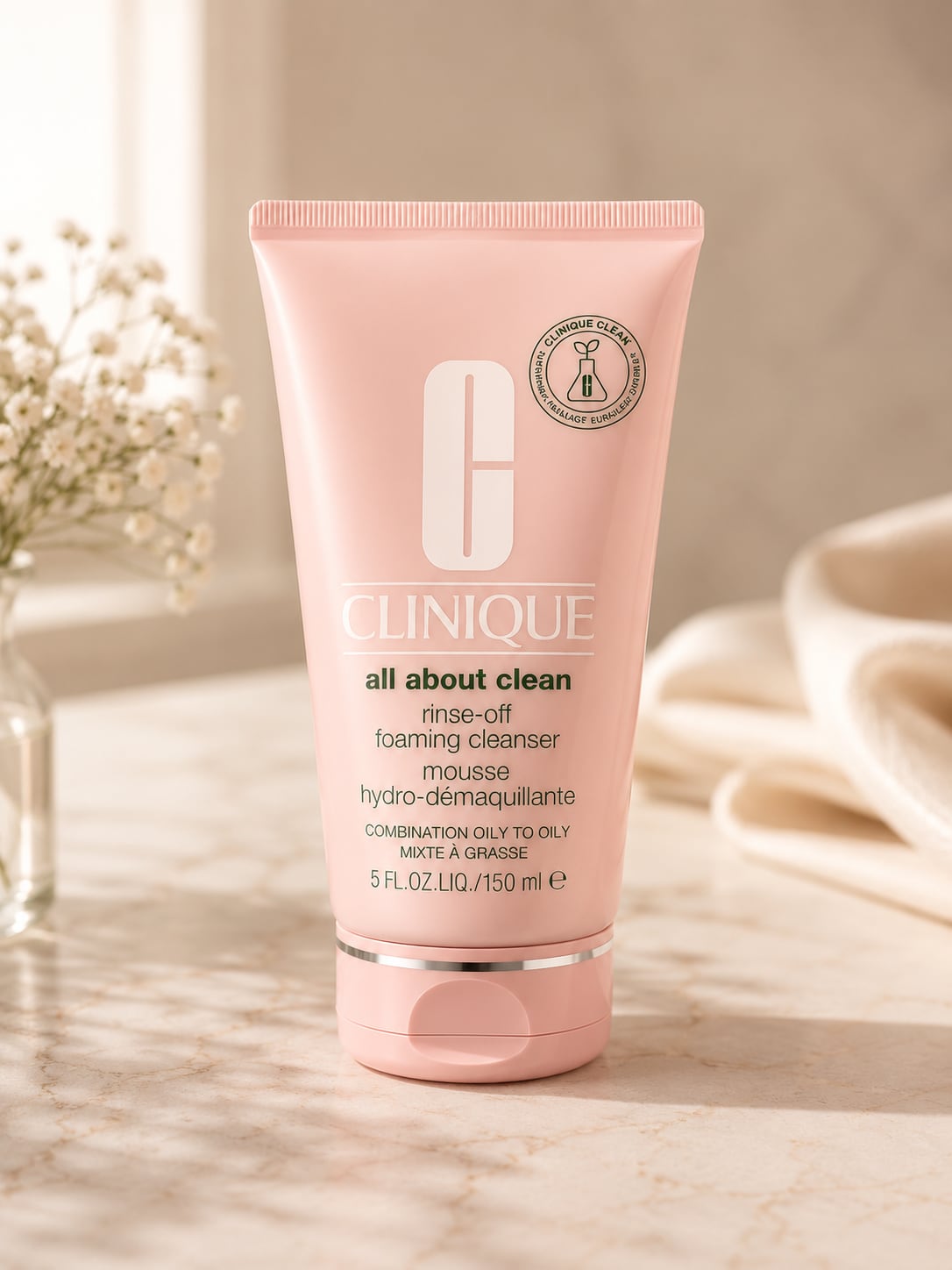
Two Clinique moisturizers live in my routine, and each has its own job.
Moisture Surge 100H Auto-Replenishing Hydrator
Moisture Surge is one of the products most associated with Clinique, and it’s easy to see why. The texture isn’t a traditional cream at all - it’s a pink gel-cream, light, cool, and very pleasant, that melts into skin fast. Not oily, not heavy, and exactly right on days when I want skin hydrated but still light and comfortable.
Clinique states the formula includes Aloe Bioferment and hyaluronic acid. The brand’s fermented aloe is made from aloe extract, lactobacillus, and active aloe waters, while hyaluronic acid serves as a moisture-binding ingredient. The formula is oil-free and also includes vitamins C and E as antioxidants.
What “100H” means
The 100H figure is a brand claim based on Clinique’s own testing of how long hydration lasts after application. It does not mean you can apply the cream once every four days and skip everything in between - it describes moisture-retention performance under the company’s test conditions, not a usage instruction. I use it morning and evening as needed, and the number on the package doesn’t decide when my skin wants hydration.
How it feels
The closest description I have is “water for skin.” Hydration lands without leaving a layer sitting on top. It’s a summer product for me, when my skin refuses a rich cream, and a great one before makeup.
I don’t judge a moisturizer only by how bare skin feels afterward. I judge it by what happens next. Does the makeup slip? Does it pill? Does the cream throw too much shine? Do the layers separate? Moisture Surge works beautifully under makeup because it’s light and absorbs fast. Clinique positions it as a hydrating base that can go under makeup, too.
I apply a thin layer and wait a few minutes before sunscreen or makeup. Cream that’s still wet under whatever comes next is asking for trouble.
Who it’s for
- Normal, combination, or oily skin that’s lacking water.
- Sensitive skin that prefers a light texture.
- Anyone looking for a summer moisturizer.
- Anyone wearing makeup who wants a layer that isn’t heavy.
- Anyone who dislikes an oily feel.
When it isn’t enough
Very dry skin often needs more than water-binding ingredients. It needs richer, more occlusive ones that slow moisture loss. So skin that feels tight an hour after application doesn’t mean the product is bad - it means it’s too light for what you need. That’s my cue to switch to the next one.
Dramatically Different Moisturizing Lotion+
Clinique’s yellow lotion isn’t new, flashy, or trending. It runs on a simple idea: help skin hold onto moisture and support its barrier. The quiet products are often the ones that stick around.

Dramatically Different Moisturizing Lotion+ is the third step in Clinique’s 3-Step System. According to the brand, it’s formulated mainly for very dry to dry skin, and a blend that includes sunflower seed oil, barley extract, cucumber extract, and hyaluronic acid is meant to help strengthen the moisture barrier and support skin’s hydration level.
How it differs from Moisture Surge
Moisture Surge feels like water. Dramatically Different feels like protection. The texture is richer, creamier, more nourishing. It isn’t a heavy mask, but I notice it on my face. The sensation isn’t just a hit of hydration - it’s a comfortable layer sitting on top keeping things calm. This is what I reach for when my skin is dry, when the AC has been blasting for hours, in winter, or through stretches when my skin is thirstier and less resilient than usual.
One correction to how I described it earlier: the Lotion+ version is marketed mainly for very dry to dry skin. Clinique makes other versions in the Dramatically Different family for combination and oily skin. So I wouldn’t hand the yellow lotion to everybody.
Does it work under makeup?
Yes, in the right amount. On dry skin it builds a beautiful base, particularly where makeup grabs at rough patches. Go too thick, or skip the absorption time, and it turns richer than your makeup wants.
I choose between the two by how my skin feels that morning, not out of loyalty to a fixed routine. Some days Moisture Surge is plenty. Some days Dramatically Different is the answer. Having the choice is the point: skin isn’t the same every day, so skincare doesn’t have to be either.
The eye area: two textures, two jobs
The eye area is where I compromise least on comfort. An eye cream can have a spectacular ingredient list, but if it stings, makes my eyes water, or breaks down my concealer, it’s out.
Two Clinique eye products need separating here, because the names and packaging make them easy to confuse.
Moisture Surge Eye 96-Hour Hydro-Filler Concentrate
This is the clear-pink gel with the tiny beads. The texture is very light, almost watery, and it’s built to deliver hydration and a refreshed feel. Clinique lists hyaluronic acid and caffeine among the key ingredients, and markets it for all skin types, especially a dry or puffy eye area.

This is my morning product. It doesn’t sit like an oily layer, it absorbs fast, and it doesn’t drag under concealer. When it’s cool, it feels wonderful on a tired-looking under-eye.
It won’t erase genetically inherited dark circles and it won’t get rid of wrinkles. A moisturizing product can temporarily soften the look of dryness-related fine lines, because hydrated skin looks fuller and smoother. Don’t let that effect get sold to you as structural change.
All About Eyes
The creamier pink formula I mentioned earlier isn’t part of the Moisture Surge line at all - it’s most likely All About Eyes, one of Clinique’s older, well-known eye creams. Clinique describes it as a lightweight eye cream that helps reduce the appearance of puffiness and dark circles, and it’s ophthalmologist tested, allergy tested, and fragrance-free.
The texture is creamier than the Moisture Surge eye gel without being heavy. I want it when the under-eye needs more richness and comfort, usually in the evening or through a dry stretch.
Precision matters here too: dark circles come from genetics, facial structure, blood vessels, pigmentation, lack of sleep, and more. An eye cream can improve hydration, temporarily reduce the look of puffiness, and change how light bounces off the skin. It won’t necessarily touch whatever is actually causing the darkness.
How much to use
Very little. A small amount, patted gently around the orbital bone. I don’t take it right up to the lash line, and I don’t load it near the inner corner, because product travels on the skin’s warmth and migrates into the eye. More cream doesn’t buy more results. It just shifts your concealer or leaves the area feeling heavy.
The treatment I reach for when I want my glow back
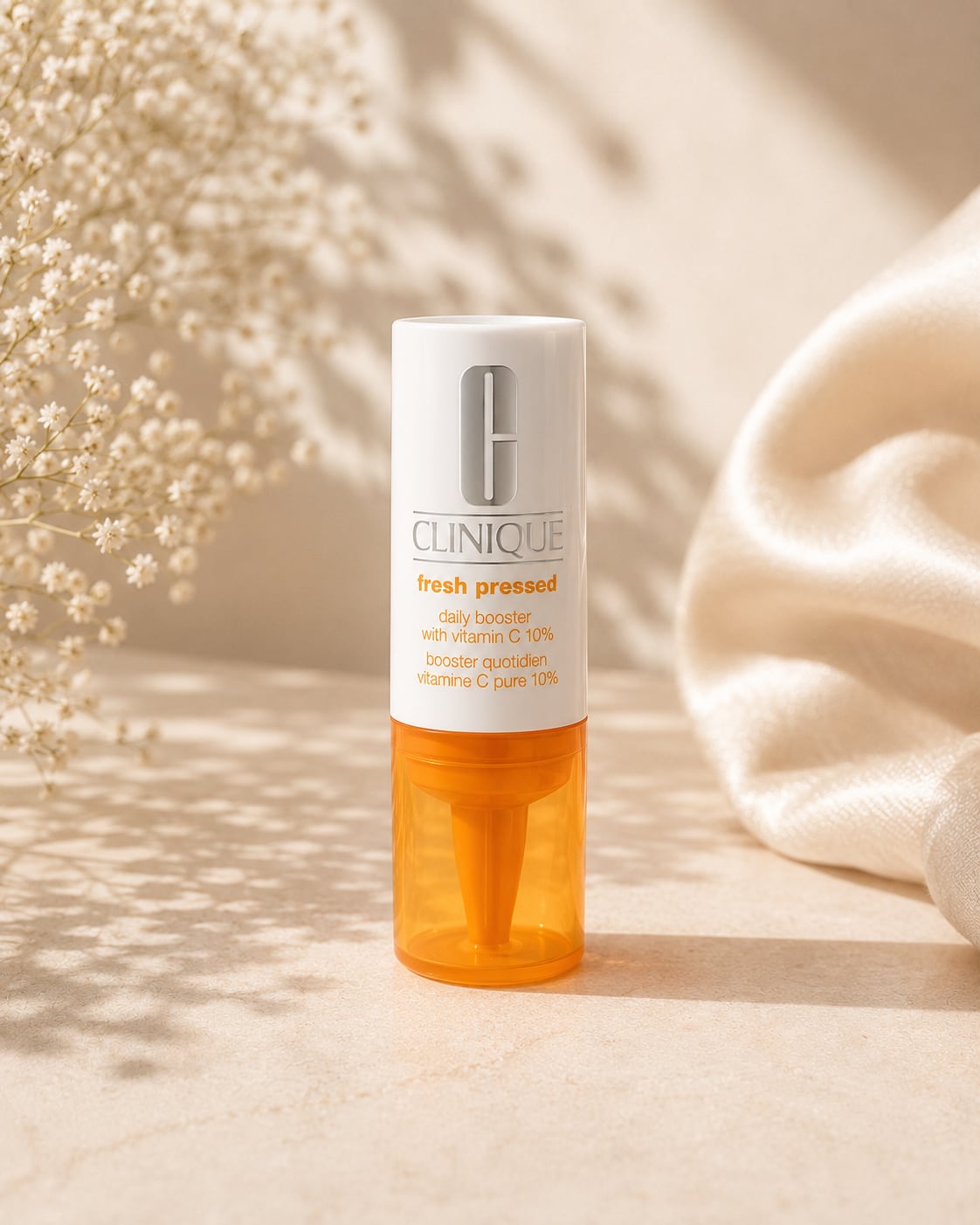
Clinique Fresh Pressed Daily Booster with Pure Vitamin C 10%
Vitamin C is a complicated category for me. I know what it offers: ascorbic acid is an antioxidant, used in cosmetic formulas to improve the look of dull, uneven skin. None of that knowledge helps when your face is stinging.
I’ve tried the well-regarded, well-reviewed vitamin C treatments. Some were rich, some were sophisticated, and several didn’t last a month in my routine because my skin wanted nothing to do with them.
Clinique’s Fresh Pressed was the one that stood out to me. Not because it’s weak - it carries 10% pure vitamin C - but because even at that concentration it was one of the very few products in this category I could actually use without the irritation response I’ve come to expect from vitamin C.
Why the packaging matters
Pure vitamin C, ascorbic acid especially, is sensitive to air and light and can oxidize. Clinique seals it in a vial that blocks both, keeping the vitamin C powder separate until you activate the bottle. Press it, the powder releases into the emulsion, you shake the vial, and only then do you start using it.
I didn’t find an official basis for the claim that the short shelf life is because the product “contains no preservatives.” The main reason Clinique emphasizes is the freshness and stability of the vitamin C after activation. The company recommends using each vial within seven days for maximum efficacy, and notes it may still be effective for up to about ten days. The box comes with four vials, so you can think of it as roughly a four-week treatment.
How to use it
Per the brand’s instructions: activate the vial, shake it well, and mix a few drops into your moisturizer. Follow the directions on the package you actually bought, since guidance and formulas get updated. I don’t open all four vials at once. One vial, used through the recommended window, then the next.
Why I treat it as a periodic treatment
You can technically fold vitamin C into a permanent routine if your skin tolerates it. For me this one works best as a targeted course: before an event, before a stretch where I want my skin looking alive, after a run of looking tired and dull.
The format does something psychological, too. Opening a vial starts a short, defined treatment. No serum sitting open on a shelf for eight months - a beginning, a stretch of consistency, an end.
In my experience my skin catches more light and looks fresher. I call it my “glow treatment,” and I mean that as my own description of what I see, not a promise the product will change anyone’s skin on a schedule.
Is vitamin C right for sensitive skin?
Sometimes yes, sometimes no. A product tested on sensitive skin can still sting or irritate, especially over a compromised barrier or alongside retinoids, acids, and other exfoliating treatments.
On sensitive skin I’d start with a small amount, not daily, and not the same night as other actives. Morning SPF matters in every routine, and it matters more when you’re treating the look of spots, dullness, and sun damage.
if you experience strong or ongoing stinging, you don’t need to “push through it.” Stop.
What Clinique gives me that other brands often haven’t
Not a promise of perfect skin.
Quiet.
Quiet is nearly impossible to explain to someone who can put on almost any product without consequence. Anyone living with sensitive skin knows exactly what it’s worth.
The quiet of knowing your makeup remover won’t leave your eyes red. The quiet of knowing your moisturizer won’t start stinging ten minutes in. The quiet of knowing a familiar product is still there after you try something new that doesn’t work out.
Clinique isn’t the only brand that suits sensitive skin. There are excellent brands out there, advanced formulas, wonderful dermatological products. And not every Clinique product suits everyone.
But the brand’s approach is consistent: allergy testing, no fragrance in the skincare formulas, segmentation by skin type, and a routine that doesn’t have to be complicated. In a market forever selling one more step, a brand you can build a clear routine around is worth something real.
My Clinique routine, in order
Evening
Step 1 - Remove makeup and sunscreen. Take The Day Off Cleansing Balm on dry skin, gentle massage, add water, rinse.
Step 2 - A second cleanse, only if you need it. After heavy makeup, or if skin doesn’t feel fully clean, follow with a gentle cleanser. On sensitive skin there’s no reason to keep cleansing until your face squeaks.
Step 3 - Liquid exfoliant. Clarifying Lotion 1.0, applied gently, at whatever frequency your skin tolerates - not necessarily twice a day.
Step 4 - Eye area. Moisture Surge Eye 96H for a light hydration, or All About Eyes when I want a creamier texture.
Step 5 - Moisturize. Moisture Surge 100H when skin wants light hydration, or Dramatically Different Moisturizing Lotion+ when it’s dry and needs a richer layer.
Morning
Step 1 - Gentle cleanse. As needed. Not every face needs an aggressive morning wash.
Step 2 - Clarifying Lotion 1.0. Only if skin is calm and tolerating the frequency.
Step 3 - Fresh Pressed Vitamin C. During a treatment period, mixed into moisturizer per the instructions.
Step 4 - Eye cream. A small amount of gel or cream.
Step 5 - Moisturizer. Moisture Surge or Dramatically Different, depending on how skin feels.
Step 6 - Sunscreen. A non-negotiable step that moisturizer or vitamin C never replaces.
Mistakes to avoid
Assuming every Clinique product suits sensitive skin. It doesn’t. “Allergy Tested” and “Fragrance-Free” are good starting points, not a guarantee of personal fit.

Choosing a Clarifying Lotion by bottle color. There are several versions and the differences matter. For sensitive skin, I mean the alcohol-free 1.0 version specifically.
Using the balm on wet skin. It starts on dry skin so it can dissolve makeup and oil. Water comes in after you’ve massaged it.
Reading stinging as proof a product is working. It’s not a marker of efficacy.
Stacking too many exfoliating treatments. Clarifying Lotion is already your exfoliation step. Adding acids, retinol, a granular scrub, or vitamin C on top means building up gradually.
Expecting Moisture Surge to act like a rich cream on very dry skin. It’s a light hydrator. Very dry skin needs something richer, or another layer.
Opening several Fresh Pressed vials at once. The entire point is keeping the vitamin C fresh until you use it. One vial at a time.
So would I recommend Clinique for sensitive skin?
Yes, but not blindly.
Get to know the brand, learn the differences between the products, and choose precisely. Start with one product, patch-test a small area, and give your skin time to answer before you build a whole routine around it.
For my skin, everything covered here has been an excellent call. Take The Day Off is the makeup remover I trust. Clarifying Lotion 1.0 is the green formula I’ve come back to for years to keep skin smooth and clean. Moisture Surge is my light hydration. Dramatically Different is what I use when I need more. The two eye products give me a choice between a light gel and a comfortable cream. And Fresh Pressed is the treatment I reach for when I want my glow back.
Not one of them is a miracle. Together they add up to something that beats a miracle most days: a routine I can actually stick with.
Sensitive skin doesn’t have to prove anything
Skincare culture has a pressure problem. The constant sense that we should all be doing more.
Another acid. Another serum. Another mask. Another step. As though skin buried under ten products is better cared for by definition.
Sensitive skin teaches the opposite lesson. It teaches you to stop. To listen. To tell a light tingle from real burning, hydration from an active, a product that photographs well from a product you can live with.
To me, good skincare shouldn’t make me think about my skin all day long. It should let me forget about it.
No tightness. No checking the mirror for redness. No working backward through the layers to find which one caused the irritation. Just being comfortable in my own skin.
That’s why I keep coming back to Clinique. Not because every product is perfect. Not because “Allergy Tested” promises a reaction will never happen. Because in a noisy landscape of launches, trends, and enormous promises, I found a handful of products that do something simple and rare:
Take care of my skin without getting in the way of it being skin.